
Haryana Police Suicide Case 2025: Twin Tragedies, Corruption Allegations & the Deepening Crisis of Trust
Disha9 min read
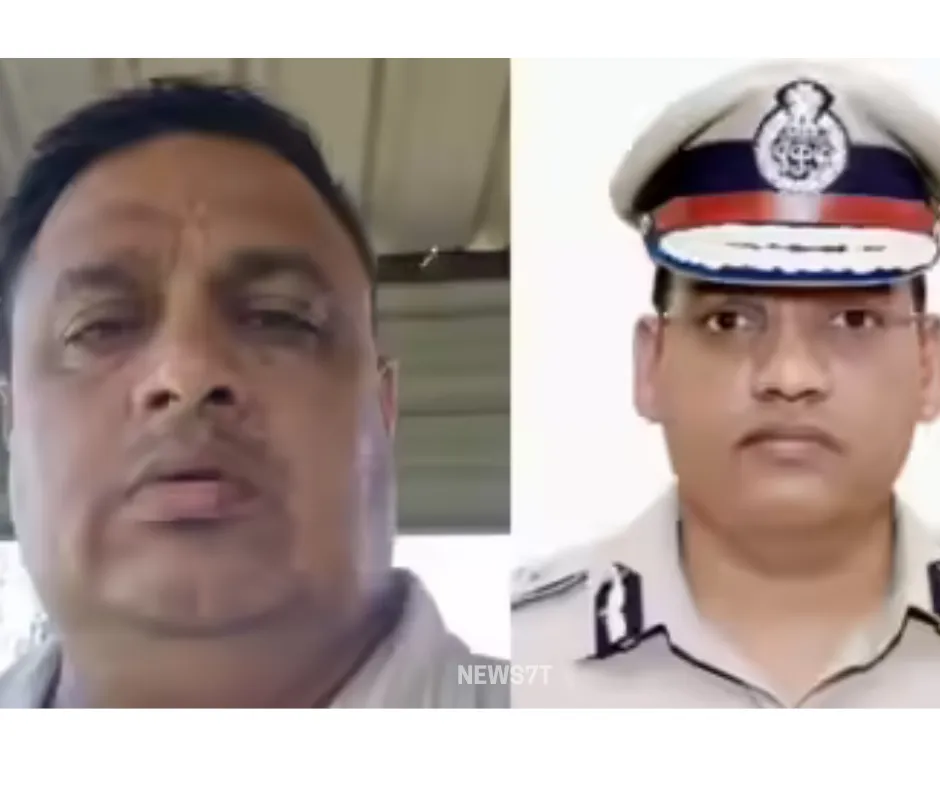
Haryana Police Case tragic suicides of two senior police officers in quick succession — one an Additional Director General of Police (ADGP) and the other an Assistant Sub-Inspector (ASI) — have thrown Haryana’s law enforcement and political establishment into unprecedented turmoil. What began as one officer’s personal tragedy has spiraled into a full-blown institutional crisis, exposing fault lines of corruption, caste politics, and administrative paralysis.
The deaths of ADGP Yash Puran Kumar on October 7 and ASI Sandeep Kumar Lathar on October 14, both under deeply controversial circumstances, have rocked the state from Chandigarh to the villages of Rohtak and Jind. As investigations unfold, the government and the police hierarchy find themselves under immense scrutiny, balancing between maintaining public order and addressing demands for accountability.
Table of Contents
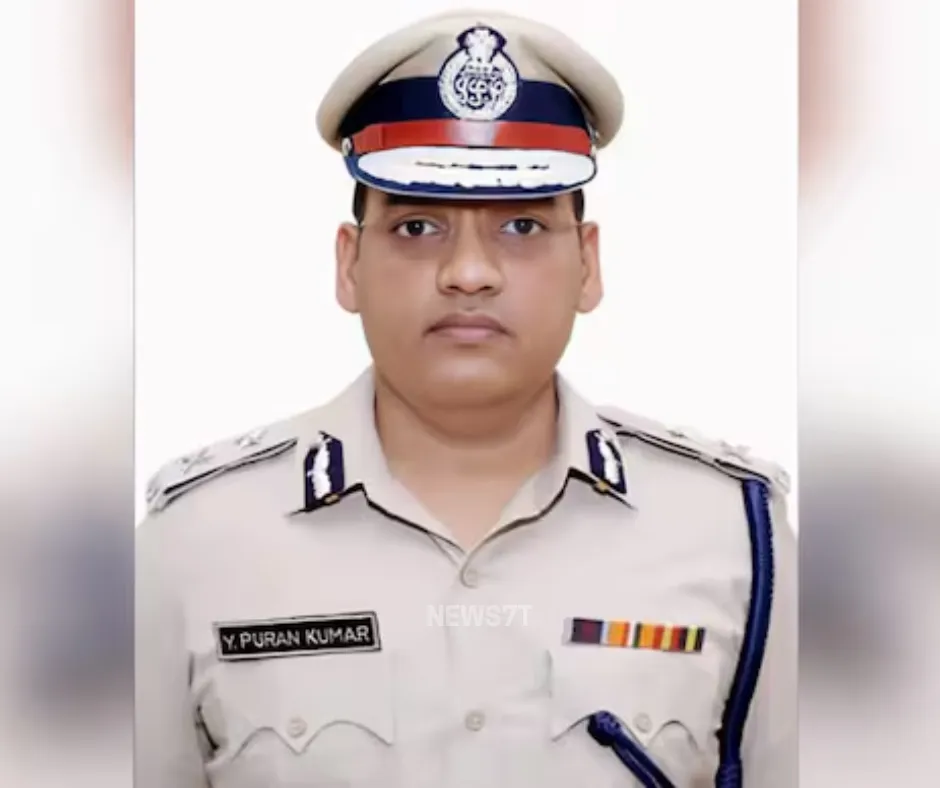
ADGP Y. Puran Kumar’s Death
ADGP Y. Puran Kumar, once regarded as a strict but influential officer within Haryana Police, was found dead at his Gurgaon residence earlier this month. His suicide sent shockwaves through bureaucratic and political circles, not only because of his senior rank but also due to the explosive suicide note he allegedly left behind, naming senior officers — including Haryana DGP Shatrujeet Kapur and former Rohtak SP Narendra Bijarnia — as reasons for his distress.
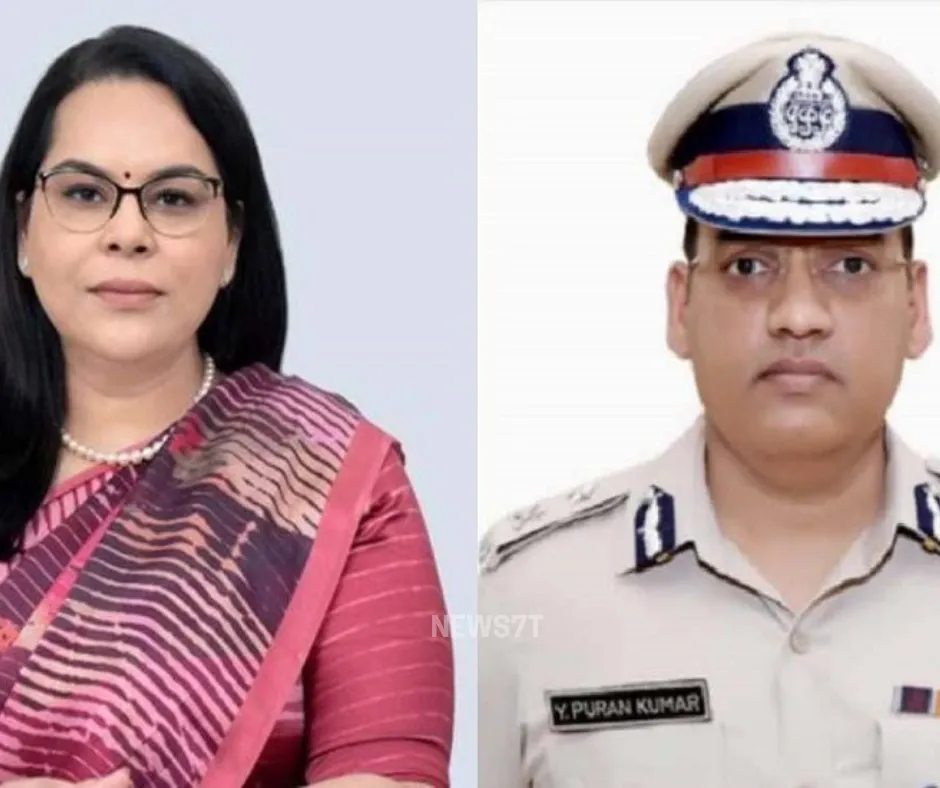
Kumar’s death quickly took on layers of political and social meaning. His wife, Amneet P. Kumar, a senior IAS officer, refused to consent to an autopsy for more than a week, demanding strict action against the officers named in her husband’s note. Dalit organizations and political parties rallied behind the family, branding the case as one of caste injustice and systemic bias.
The epicenter of the crisis became Amneet’s residence in Panchkula, where delegations of politicians, activists, and community leaders congregated daily. Her firm refusal to allow a postmortem effectively froze the investigation, keeping the system in an unusual deadlock.
According to senior officials, Chief Minister Nayab Saini, Chief Secretary Anurag Rastogi, and Additional Chief Secretary (Home) Sumita Misra all personally reached out to the family, hoping to convince them to proceed with the formalities. Every effort, however, failed. As one senior bureaucrat put it, “This was no longer a procedural issue — it had turned into a question of public sentiment and political survival.”
DGP Kapur Sent on Leave, O.P. Singh
Amid the growing furor, the Haryana government made a dramatic move on the night of Monday, October 13. In what officials called a “temporary but necessary step to restore confidence,” DGP Shatrujeet Kapur was sent on leave pending the conclusion of the inquiry.
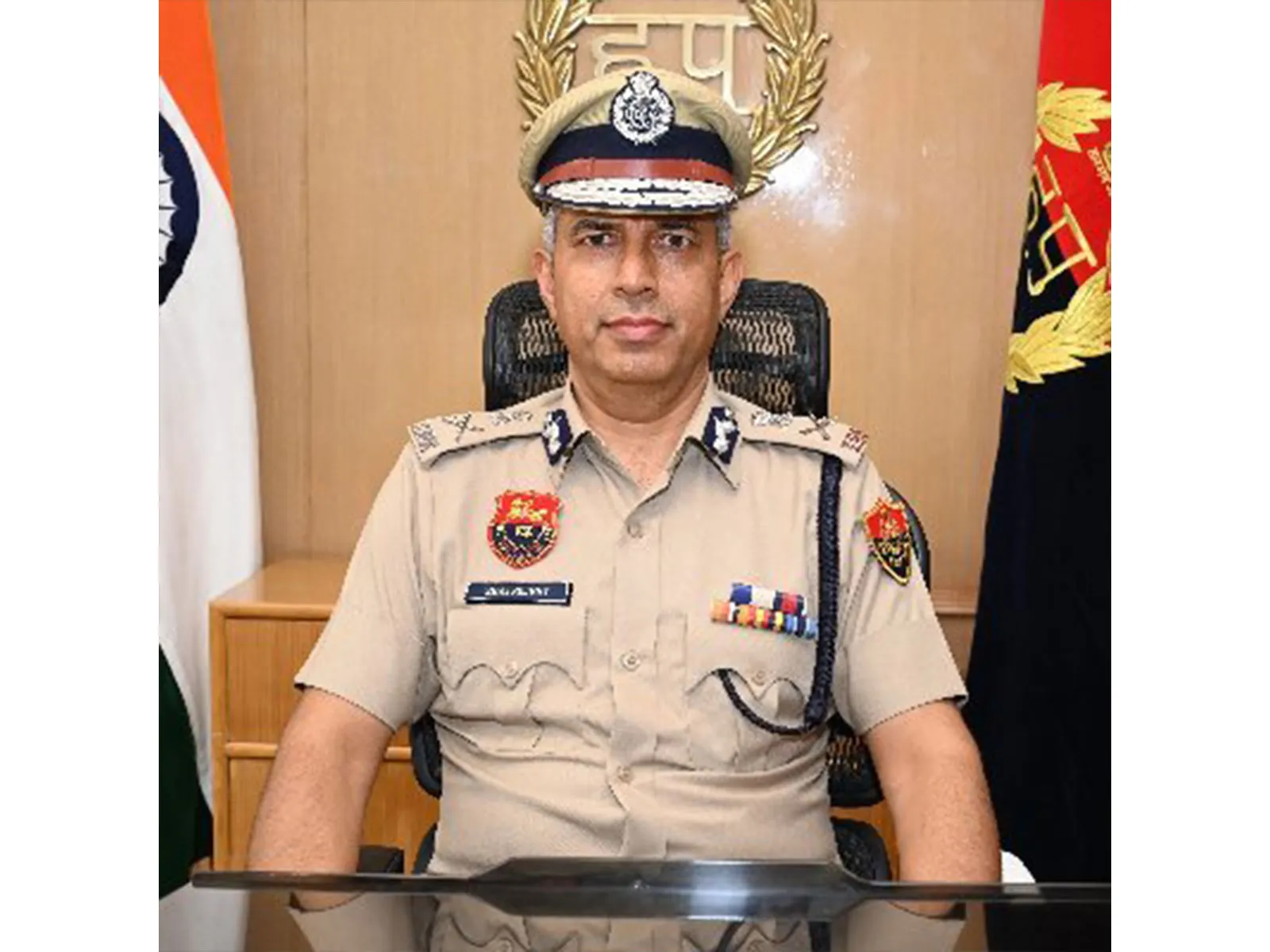
By the following morning, O.P. Singh, a 1992-batch IPS officer, was appointed as the officiating Head of the Police Force (HoPF). Singh already held key positions as the Managing Director of the Haryana Police Housing Corporation (HPHC), Director of the State Narcotics Control Bureau (HSNCB), and Director of the Forensic Science Laboratory (FSL) at Madhuban.
Singh formally assumed charge in Chandigarh on Tuesday afternoon and immediately held meetings with senior officers to discuss law and order, the internal morale crisis, and strategies to reinforce public trust.
During the closed-door meeting, Singh urged his officers to “maintain continuity, ensure stability, and rebuild faith in the force.” The Haryana government, in its official communication, lauded Singh as a “seasoned, balanced leader” who had delivered reforms in forensic science coordination, narcotics regulation, and police housing modernization.
The reshuffle was, in reality, a calculated attempt to project administrative control and cool tempers after days of unrest. The optics, however, were unmistakable: the government had bowed to pressure, at least temporarily removing Kapur to placate a grief-stricken family and an outraged public.
ASI Sandeep Kumar’s Shocking Death
Just as the administration was beginning to stabilize the fallout from the ADGP’s suicide, events took a darker and more tragic turn. On October 14, ASI Sandeep Kumar Lathar, the officer who had been part of the Rohtak cybersecurity team investigating corruption allegations linked to Puran Kumar’s tenure, was found dead by suicide at his maternal uncle’s farm in Ladhot village near Rohtak.
Sandeep, an officer known among peers for his dedication and intelligence, left behind a four-page suicide note titled “Final Note” and a 6.28-minute video message. His words redefined the narrative that had dominated the state for over a week.
In the note, Sandeep rejected the notion that Puran Kumar’s death was related to caste discrimination. Instead, he accused the late ADGP of being “deeply corrupt” and claimed that his suicide was driven by fear of exposure, not injustice.
In the video, Sandeep stated, “Puran Kumar committed suicide only to spare his family embarrassment.”. “He was not a victim of casteism. He was a corrupt officer who sold postings for money. CDRs and CCTV footage will reveal everything.”
The ASI’s message was not merely accusatory; it was personal, emotional, and symbolic. With visible distress etched across his face, he declared that he was “sacrificing his life to awaken people against corruption” and invoked the ideals of Bhagat Singh, saying his act was not one of despair but protest.
A Cry Against Systemic Decay
In the video, Sandeep also defended officers named by Puran Kumar — DGP Shatrujeet Kapur and SP Narendra Bijarnia — describing them as “honest men standing against corrupt forces”. He warned that certain “bodies and associations” were hiding behind the shield of caste identity to manipulate truth and politicize the deaths for personal gain.
“Through politics, great truths are being concealed. The poison of casteism is spreading. Why are you destroying the country?”
“The DGP of Haryana is an honest person. Don’t destroy the department’s integrity to give corrupt people a free pass.”
His assertions jolted the narrative, dividing public opinion. While some saw Sandeep as a whistleblower silenced by a broken system, others questioned whether he too was driven by institutional pressure or personal despair.
Family’s Anguish and Standoff with Authorities
Back in Ladhot, Sandeep’s family refused to allow a postmortem until a formal FIR was registered based on his suicide note. They stored his body inside a large freezer at his uncle’s home, an act that symbolized both grief and defiance.
His cousin, Sanjay Kumar, told reporters that Sandeep had appeared withdrawn and restless in the days leading up to his death. “He said he was being targeted for being too honest. None of us thought he would take such a step,” he said.
ASP Prateek Kumar and Rohtak SP Surender Singh visited the site, urging the family to cooperate with investigation procedures. SP Singh described the late officer as “a respected, hardworking member of the police family,” confirming that forensic teams had collected video and written evidence from the scene.
A Rare Consensus for Calm
In the charged atmosphere following Sandeep’s death, two influential khap panchayats in Jind district — including the Kandela and Majra khaps — convened an emergency meeting. In a rare show of unity, they appealed for a fair investigation and communal harmony, emphasizing that the matter should not devolve into caste-based polarization.
The khap leaders, usually divided along political lines, jointly stated:
“This is not a matter of caste but of truth and justice. Let the investigation proceed based on facts. Haryana’s dignity depends on restraint and fairness.”
Their statement, amplified across rural communities, helped temporarily ease tensions in Rohtak, Jind, and surrounding districts, where villagers had begun gathering near both officers’ homes.
Haryana Government Caution
The Haryana government, already reeling under intense public pressure, has chosen to tread carefully following the ASI’s suicide. According to senior officials in the home department, the state has decided not to engage directly with the ADGP’s family for now. “We are monitoring the situation. The second suicide has complicated matters,” one top official said on condition of anonymity.
The officer added that the Chandigarh Police’s Special Investigation Team (SIT), which is handling aspects of the case, continues to gather facts from both incidents. “The government has sympathy with all sides but will act based on verified evidence, not emotion,” the official noted.
In private, insiders admit that the Haryana government’s earlier strategy — appeasement through symbolic administrative reshuffles — may have inadvertently emboldened further unrest. “We thought sending Kapur on leave would calm things down,” said one officer. “Rather, it appears to have caused fresh wounds.”.
A Breach of Faith Within the System
The dual suicides expose deeper fractures inside Haryana’s policing structure — between senior leadership and the rank-and-file, and between professional integrity and political proximity.
The late ASI Sandeep Kumar was part of a team investigating corruption allegations within the Rohtak police hierarchy, including Puran Kumar’s reported dealings. Sources claim the investigation had unearthed evidence of officers “collecting money to fix investigations and transfers.” When the matter escalated, senior officers allegedly pressured subordinates to tone down the report.
Whether that pressure contributed to Sandeep’s despair remains under review, but the timing — one week after Puran’s death — suggests a chain reaction of guilt, retaliation, and fear.
- A Political and Moral Turning Point
- Politically, the suicides have forced the Haryana government to reconsider how internal administrative conflicts spill over into the public domain. The PM rally in Sonipat, scheduled shortly after Puran Kumar’s death, had to be scaled down amid protests and scrutiny.
- The optics could not have been worse: a senior Dalit officer dead under suspicious circumstances, his IAS wife refusing state cooperation, and a subsequent death of a junior officer accusing the same man of corruption. Opposition parties seized on the contradictions, accusing the BJP-led state of mishandling the affair and deepening caste and bureaucratic divisions.
- A senior political strategist familiar with the situation commented:
- “This is not just about two deaths. It’s about public trust in the police as an institution. If officers themselves can’t trust their system, how will citizens?”
- Indeed, analysts describe the episode as one of Haryana’s gravest crises of faith within its administrative machinery.
O.P. Singh’s Challenge
As officiating DGP, O.P. Singh faces the formidable task of restoring stability while steering the department through scrutiny, reform demands, and internal fatigue. Known for his balanced leadership style, Singh has already begun visiting district headquarters and meeting mid-level officers to “rebuild morale.”
His immediate priorities include:
Reinstating confidence among lower-rank officers.
Ensuring transparency in ongoing investigations.
Preventing the misuse of caste and political influence in administrative responses.
Strengthening mental health support systems within the police.
The government has publicly reiterated its commitment to an impartial probe and announced that any evidence of wrongdoing — by or against any officer — would be acted upon “without fear or favour.”
How Deep Is the Rot?
Beyond the individuals involved, the unfolding saga raises systemic questions. Why did two officers, separated by hierarchy but connected by the same institution, feel cornered enough to end their lives within days of each other?
Experts point to mounting pressure within the police structure — intensified workloads, politicization of transfers, lack of internal grievance redressal, and caste-based factions. The intertwining of personal honor, community identity, and bureaucratic power has made Haryana Police not just a law enforcement body, but a reflection of the state’s sociopolitical churn.
Way Forward
In the wake of such back-to-back tragedies, the need for institutional introspection is undeniable. Psychologists advising the Haryana Home Department are pushing for mandatory stress assessments, confidential counselling, and anonymized reporting channels to identify officers at risk before tragedy occurs.
Civil society voices are also calling for a more transparent disciplinary and transfer mechanism to minimize perceptions of corruption and favoritism. Rural leaders demand a stronger anti-corruption cell independent of political influence.
For the families of Puran Kumar and Sandeep Kumar, however, the wounds remain open. Both wives — one an IAS officer and the other a homemaker — continue to symbolize two contrasting narratives: one of persecution, the other of exposure.
The twin suicides have become a mirror reflecting the moral fatigue of Haryana’s policing system. They have ignited a conversation that reaches beyond individual blame toward institutional ethics, governance integrity, and the fragility of human trust under bureaucratic pressure.
As Haryana’s police force moves ahead under acting chief O.P. Singh, one truth stands clear: rebuilding credibility will require not just administrative reforms but an honest confrontation with the forces — political, caste-driven, and psychological — that erode courage from within.