
World Population Day: Shocking Facts & Solutions 2026
Disha18 min read
World Population Day is celebrated on July 11 every year. It is a United Nations awareness day that focuses on population-related issues such as reproductive health, family planning, maternal health, gender equality, poverty, and sustainable development. The day matters because population growth and demographic change affect many parts of life, including education, employment, healthcare, housing, and the environment. By highlighting these issues, the observance encourages governments, organisations, and individuals to think about how population trends shape the future of societies.
World Population Day began after interest grew around the world reaching five billion people in 1987. The United Nations Development Programme established the observance in 1989, and it was first marked in 1990. Since then, it has been used each year to draw attention to different population concerns. The central idea is not simply to count people, but to understand the quality of life, access to rights, and the need for balanced development. That is why the day often emphasises young people, women, and vulnerable communities.
Table of Contents
In 2026, the theme is “Realising the hopes and aspirations of young people – today and for the future.” This theme shows that young people are not just the future; they are important right now. It also points to the need for better education, health services, opportunities, and support systems so that young people can build stable and meaningful lives. The theme connects population policy with human dignity and long-term planning.
If you need it for school or writing practice, a simple way to describe it is: World Population Day is a global observance that reminds us to care about population issues, human rights, health, and sustainable development.
How Is the World’s Population Counted?
World Population Day is celebrated on July 11 every year. World Population Day is a United Nations awareness day that focuses on population-related issues such as reproductive health, family planning, maternal health, gender equality, poverty, and sustainable development. World Population Day is important because population growth and demographic change affect many aspects of life, including education, employment, healthcare, housing, and the environment. By highlighting these issues, World Population Day encourages governments, organizations, and individuals to understand how population trends shape the future of societies.
The history of World Population Day began after the world’s population reached five billion people on July 11, 1987, an event that attracted global attention. The United Nations Development Programme (UNDP) established World Population Day in 1989, and the first official observance took place in 1990. Since then, World Population Day has been celebrated annually to raise awareness of changing population trends and their impact on sustainable development.
The purpose of World Population Day is not simply to count the number of people on Earth. Instead, it highlights the importance of improving quality of life, protecting human rights, ensuring equal access to healthcare and education, and promoting balanced and sustainable development. Each year, World Population Day also draws attention to the needs of young people, women, and vulnerable communities, encouraging global action to build a healthier and more sustainable future.
Why Is Population Counted?
Counting the population is one of the key objectives highlighted on World Population Day because governments and organizations need accurate population data to make informed decisions. The main purpose of a population count is effective planning. When officials know how many people live in a particular area, they can determine how many schools, hospitals, roads, water systems, and jobs are needed. Reliable population statistics help ensure that resources are distributed fairly and where they are needed most.
Another important reason emphasized on World Population Day is sustainable development. Population data helps identify demographic trends such as poverty, migration, aging, birth rates, death rates, and changes in family size. These insights show how a country is changing over time and help governments prepare for future needs. For example, areas with a growing number of children may require more schools and teachers, while regions with an aging population may need additional healthcare services and pension support.
World Population Day also highlights the importance of fairness and inclusion. A complete population census ensures that everyone—including women, children, migrants, and people living in remote areas—is represented in official census data. People who are not counted may have limited access to government services, political representation, or social welfare programs. In this way, population counting is not only about numbers but also about ensuring that every person is recognized and considered in national planning.
Population estimates are equally important for economic planning and public policy. Governments rely on accurate population figures and population statistics to prepare budgets, allocate funding, and evaluate whether policies are achieving their goals. On a global level, organizations such as the United Nations use world population data to monitor global population trends, public health, migration, and sustainable development. This is why World Population Day highlights the importance of accurate population counting as a foundation for effective planning, equality, economic growth, and a more sustainable future for everyone.
In simple words, people are counted so leaders can understand real needs, use money wisely, protect rights, and prepare for the future.
Who Conducts the Population Census?
In India, the census is counted by the Office of the Registrar General and Census Commissioner of India, which works under the Ministry of Home Affairs. The census is planned and notified by the Government of India, and it is carried out with support from state governments and Union Territory administrations.
- At the field level, different officials help with the counting. The Directorate of Census Operations in each state or Union Territory handles census work in its area, while District Collectors or Municipal Corporation Commissioners often serve as Principal Census Officers for their districts. This means the census is not done by one single person; it is a large government exercise involving many levels of administration.
- Census workers usually visit homes, ask questions, and record information about the people living there. Their job is to collect accurate data on population, housing, age, gender, education, work, and other basic details. The goal is to ensure that everyone is counted and that the data can be used for planning schools, hospitals, roads, and other public services.
In simple terms, the census is counted by trained government officials and enumerators under the supervision of the Registrar General and Census Commissioner.
What Training Do Census Workers Receive?
Completed 2 steps
- They are trained through a cascade training system that starts with national trainers and goes down to master trainers, field trainers, and finally the enumerators and supervisors who do the house-to-house counting. This helps ensure that everyone is learning the same procedures before the start of the census.
- The training usually covers the basics of census work, such as census concepts and definitions, how to ask questions, how to approach households politely, how to build rapport, and how to record answers correctly. It also includes practical instruction on using digital tools, preparing layout maps, and handling field procedures.
- A very important part of the training is data privacy and confidentiality. Enumerators are taught to remain neutral, be sensitive when asking personal questions, and protect the information collected from people. This is necessary because census data is personal and must be trusted by the public.
- The training is often organised in stages. First, national trainers are trained by subject experts, then they train master trainers, who train field trainers, and those field trainers train the final census workers at the district or sub-district level. In the 2021 census planning, this structure was used to train around 30 lakh enumerators and supervisors.
In simple words, census workers are trained to collect data accurately, respectfully, and securely so the census can be reliable and useful for planning.
Why Is It Celebrated?
- World Population Day is celebrated to raise awareness about important population issues and why they matter for society, development, and the environment. It reminds people and governments that population trends are not just about numbers; they are closely connected to health, education, rights, poverty, and sustainable development.
- The day was created because the world’s population reached five billion on 11 July 1987, which drew public attention to how quickly population was growing. In response, the United Nations Development Programme established World Population Day in 1989, and the United Nations continued it as an annual observance from 1990 onward. So, the main purpose is to keep the focus on how population change affects everyday life and long-term planning.
- It is also celebrated to highlight issues such as family planning, reproductive health, maternal health, gender equality, and human rights. These are important because people should have access to choices and services that help them live healthy, dignified lives. The day gives organizations, schools, and governments a chance to discuss these topics openly and encourage action.
- Another reason World Population Day is celebrated is to remind everyone that population issues are linked with the environment and development. When population grows or changes rapidly, it can affect resources, jobs, housing, and public services. By observing this day, the world is encouraged to think about balanced development and better planning for the future.
- In simple words, World Population Day is celebrated to create awareness, promote responsibility, and support better decisions about people’s health, rights, and future opportunities. It is a day for learning, discussion, and action, especially for building a fairer and more sustainable world.
Is the World Really Overpopulated?
Completed 2 steps
- The world is not simply overpopulated in a universal, one-size-fits-all way; the issue is more complicated and depends on how you define “overpopulated.” Some experts argue that the problem is not just the number of people, but also how resources are used, how much people consume, and how fairly those resources are shared.
- On one side, many researchers say the Earth is under serious pressure because human activity is driving species loss, ecosystem damage, and climate stress. From this view, the planet has too many people for the current level of consumption and environmental impact, especially when rich countries consume far more per person than poorer countries. This means the problem is not only population size, but also overconsumption and unequal resource use.
- On the other side, some analysts argue that calling the world “overpopulated” can be misleading because the Earth can still support people if systems change. They point out that food production, technology, urban planning, and cleaner energy can greatly improve how many people the planet can sustain. In this view, the challenge is not simply headcount, but how societies organize housing, transport, agriculture, and energy.
- A balanced answer is that population size matters, but it is only part of the story. A smaller number of people living with very high consumption can still cause major environmental harm, while a larger population with efficient systems can sometimes place less strain on resources. That is why many UN discussions focus on rights, education, healthcare, and sustainable development rather than just reducing population numbers.
- So, the best short answer is: the world faces real pressures from population growth, but “overpopulated” is not a simple yes-or-no label. The bigger issue is how humanity uses land, water, energy, and food, and whether that use is fair and sustainable.
What Happens If the Population Keeps Growing?
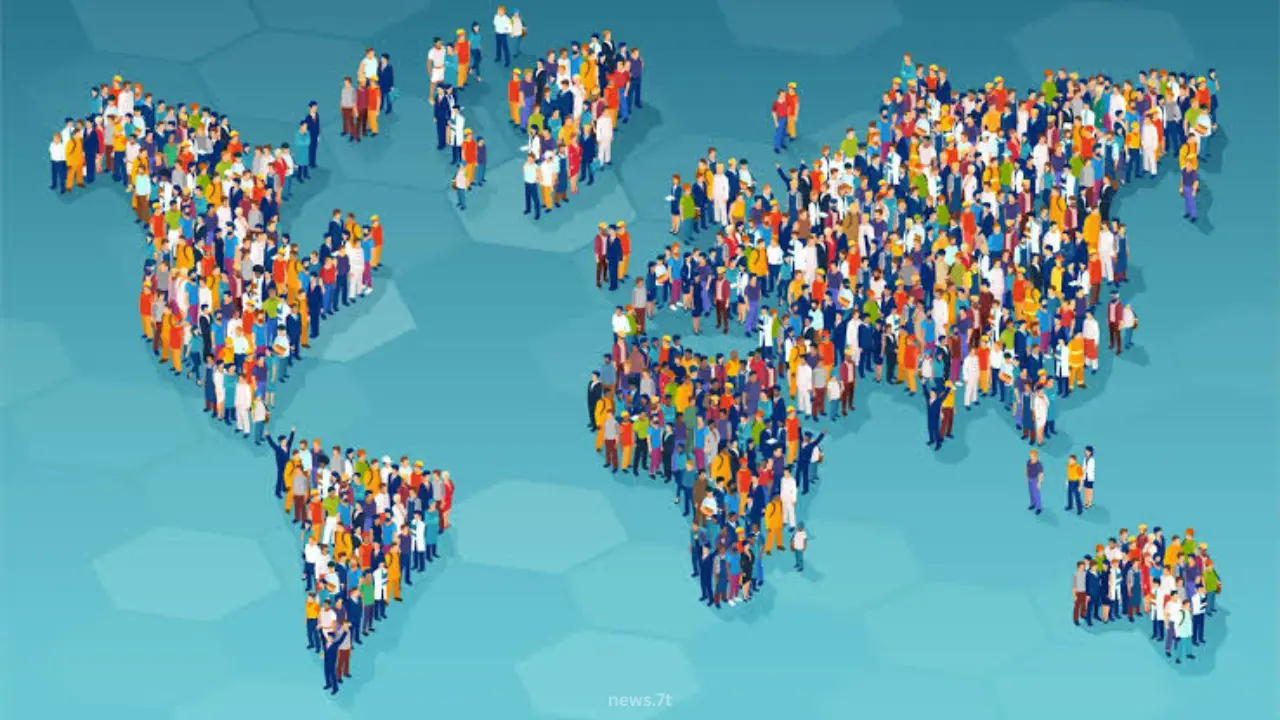
- If the population keeps growing, the biggest effect is that pressure on resources and services increases. More people means more demand for food, water, housing, schools, healthcare, electricity, transport, and jobs, so governments have to work harder to keep up. World Population Day highlights these growing challenges and encourages countries to plan for sustainable development.
- One major concern discussed on World Population Day is the environment. Continued population growth can increase deforestation, biodiversity loss, pollution, and greenhouse gas emissions if production and consumption do not become more efficient. The United Nations notes that population growth and environmental change are linked, but it also emphasizes that sustainability depends heavily on how societies consume and produce, not just on the number of people. These issues are a key focus of World Population Day.
- Another effect is economic stress in countries where population growth is rapid and development is already slow. The United Nations explains that in many low-income and lower-middle-income countries, fast population growth can make it harder to provide quality education, healthcare, and opportunities for everyone. When family sizes remain high and resources are limited, poverty can persist across generations. World Population Day raises awareness of these challenges and promotes long-term solutions.
- Population growth can also create pressure on cities. More people often leads to crowded neighborhoods, higher housing costs, traffic congestion, and greater demand for water and sanitation systems. If planning is weak, these problems can grow into shortages and inequality. If planning is strong, however, population growth can be managed through better infrastructure, education, and public services. World Population Day encourages governments to prepare for these demographic changes through effective planning.
- At a global level, experts say population growth is slowing and may eventually level off later this century. That means the future challenge is not only managing population numbers but also improving sustainability, empowering women and girls, and ensuring development keeps pace with demographic change. These priorities are central to the message of World Population Day.
- In simple words, if the population keeps growing without enough planning, the result can be more pressure on resources, greater competition, and increased environmental damage. If societies invest in education, healthcare, family planning, and efficient systems, population growth can be managed more effectively. World Population Day reminds us that sustainable planning today is essential for a better future tomorrow.
Which Countries Are Growing Fastest—and Which Are Shrinking?
- Population growth is uneven across the world. In general, many of the fastest-growing countries are in Africa, while many shrinking populations are found in Europe and parts of East Asia.
- Among fast-growing countries, population growth rates are especially high in countries such as Niger, Uganda, Angola, the Democratic Republic of the Congo, Burundi, Mali, Chad, and Tanzania. These countries are often growing quickly because they have high birth rates and younger populations. In terms of total population increase, large countries such as India, Nigeria, Pakistan, Indonesia, Ethiopia, the Democratic Republic of the Congo, Egypt, the United States, and Tanzania are adding the most people overall.
- On the shrinking side, many countries in Eastern and Southern Europe are declining, including Lithuania, Latvia, Bosnia and Herzegovina, Bulgaria, Romania, Croatia, Ukraine, Greece, Portugal, Serbia, Hungary, Poland, Albania, Moldova, Georgia, and Italy. Outside Europe, Japan, South Korea, China, and Russia are also widely noted as countries facing population decline or long-term shrinking trends. These declines are usually linked to low fertility rates, aging populations, and in some places migration losses.
- The important thing to understand is that “fastest growing” can mean two different things: growth rate or absolute increase. A smaller country can grow very fast in percentage terms, while a much larger country may add more people in total even if its percentage growth is lower. That is why population experts often look at both measures.
- So the short answer is: Africa has most of the world’s fastest-growing populations, while many countries in Europe and East Asia are shrinking.
Surprising Population Facts Most People Don’t Know
Here are some surprising population facts that many people do not know:
- The world population is now over 8 billion, but it took only about 12 years to grow from 7 billion to 8 billion, which shows that growth is still large even though it is slowing down.
- It is estimated that the global population will likely peak around the 2080s at about 10.4 billion, then stay around that level through 2100.
- India and China together make up a huge share of humanity, and population rankings are changing over time. In the future, Nigeria is expected to become one of the world’s most populous countries.
- The world’s population is not spread evenly. About 90% of people live in the Northern Hemisphere, and Asia contains the largest share of the global population.
- Population growth is slowing in many places because birth rates have declined since the 1960s.
- A very large number of births still happen every minute around the world, which means the population keeps changing constantly rather than staying fixed.
- Some countries are growing very fast, while others are shrinking. Many African countries are among the fastest-growing, while several countries in Europe and East Asia are declining.
- Population issues are not only about numbers. They are linked with food, water, education, health, rights, and the environment.
- One striking fact is that a small number of countries are responsible for a large share of future population growth, which is why demographers focus on where growth happens, not just how much there is.
- Another interesting fact is that the world’s population has grown far more rapidly in the last few centuries than in most of human history.
- In simple words, the surprising thing is not just that the world has many people, but that population growth is uneven, changing, and closely tied to development. That is why population data matters so much for planning the future.
Can Earth Support Everyone?
Earth can support everyone only if population size, consumption, and technology are managed sustainably. It is not only a question of “How many people are there?” but also “How much does each person consume, and how fairly are resources shared?”
A simple yes-or-no answer is difficult because experts disagree on the exact limit of how many people the planet can sustainably support. World Population Day encourages discussions about the world’s population, population growth, and the Earth’s carrying capacity. Some studies suggest that Earth may already be close to or beyond its sustainable limits, while others believe the planet could support more people if food production, energy use, farming practices, and waste management become more efficient. This disagreement exists because Earth’s carrying capacity changes with technology, lifestyles, and environmental conditions, making World Population Day an important opportunity to discuss sustainable solutions.
One of the most important issues highlighted on World Population Day is resource consumption. Earth’s ability to support a growing global population depends not only on the number of people but also on how resources are used. A smaller population with high levels of consumption can place more pressure on the environment than a larger population that uses resources responsibly. Population growth, food production, clean water availability, energy use, and sustainable farming all play a major role in determining whether the planet can meet future needs. Environmental challenges such as climate change, freshwater scarcity, biodiversity loss, and pollution further affect Earth’s capacity to support people, which is why these topics are central to World Population Day.
Another key topic discussed on World Population Day is quality of life. Even if Earth can technically support billions of people, it does not guarantee that everyone will have access to nutritious food, clean water, healthcare, education, housing, and economic opportunities. Many researchers believe that providing a good quality of life for a growing world population will require improvements in sustainable development, infrastructure, resource management, and social equality. World Population Day encourages countries to address these challenges through informed policies and long-term planning.
The most balanced answer is that Earth can support everyone in principle, but only if humanity manages its resources wisely and fairly. World Population Day reminds us that the real challenge is not simply the size of the global population, but how societies produce food, generate energy, reduce waste, and protect natural resources. If current consumption patterns continue unchanged, environmental pressures are likely to increase. However, with sustainable development, innovation, and responsible resource management, Earth can continue to support a growing population while improving living standards for future generations. World Population Day serves as a reminder that protecting both people and the planet requires collective action and sustainable choices.
Biggest Population Myth
Here are some of the biggest population myths people often believe, along with the reality behind them.
- Myth 1: The world population has already stopped growing.
That is not true. Global population is still increasing, even though the growth rate is slowing in many countries. Some countries have low fertility rates, but the world as a whole has not begun to shrink yet.
- Myth 2: Overpopulation is only about too many people.
This is oversimplified. The real issue is also consumption, inequality, and how resources are shared. A smaller number of people using huge amounts of energy and goods can still put heavy pressure on the planet.
- Myth 3: There is plenty of space, so population is not a problem.
Having physical space is not the same as having enough food, water, housing, and ecosystems to support people well. Much of the Earth’s land is not available for comfortable or sustainable human settlement, and agriculture already uses a very large share of habitable land.
- Myth 4: Population growth is always bad.
Population growth can create pressure, but the effect depends on how well a society plans for schools, healthcare, jobs, and infrastructure. In some places, growth can support economic activity if it is matched with investment and services.
- Myth 5: There is not enough food for everyone.
The problem is often not total production but distribution, waste, and access. Many hunger problems come from poverty, conflict, and poor logistics rather than the planet literally failing to produce enough food.
- Myth 6: Population problems cannot be solved ethically.
That is also false. Education, access to contraception, women’s empowerment, and better healthcare are ethical and effective ways to slow unwanted growth. Coercion is not necessary.
- Myth 7: Only poor countries matter in population discussions.
Population trends affect every country. Some countries are still growing quickly, while others are shrinking and aging. Both situations create different challenges.
In short, the biggest mistake is thinking population is just a numbers problem. It is really about people, rights, development, and sustainability together.
Important Global Observance
In conclusion, World Population Day is an important global observance because it reminds us that world population is not simply about counting people, but about understanding how population growth, population data, and demographic trends affect health, education, economic development, and the environment. World Population Day also highlights that population issues are closely connected to human rights, gender equality, access to healthcare, and the future of societies, especially for young people, women, and vulnerable communities.
The main message of World Population Day is that population growth is neither entirely good nor entirely bad. Its impact depends on effective planning, responsible resource management, and how fairly resources are distributed. A growing global population can increase demand for food, clean water, housing, jobs, healthcare, education, and public services. However, investments in sustainable development, quality education, healthcare, innovation, and good governance can help countries manage these challenges while improving living standards. This is why population censuses, population statistics, population studies, and World Population Day play such an important role in national planning and global development.
Another key lesson from World Population Day is that many common beliefs about population are oversimplified. People often assume the only issue is having “too many people,” but experts point out that consumption patterns, inequality, urban planning, environmental protection, and efficient use of resources are just as important as world population size. This means that the best solutions focus on sustainability, fairness, and long-term planning rather than fear or misinformation.
Ultimately, World Population Day encourages governments, organizations, and individuals to understand population trends, improve the quality of population data, and make informed decisions for future generations. By promoting awareness of global population challenges, encouraging sustainable resource use, and supporting equal opportunities for everyone, World Population Day inspires action toward a healthier, more inclusive, and more sustainable world. Every accurate population count contributes to better planning, stronger communities, and a brighter future for all.