
Aaryan Movie Review: A Gripping Thriller That Burns Bright Before Fading Away
Disha6 min read
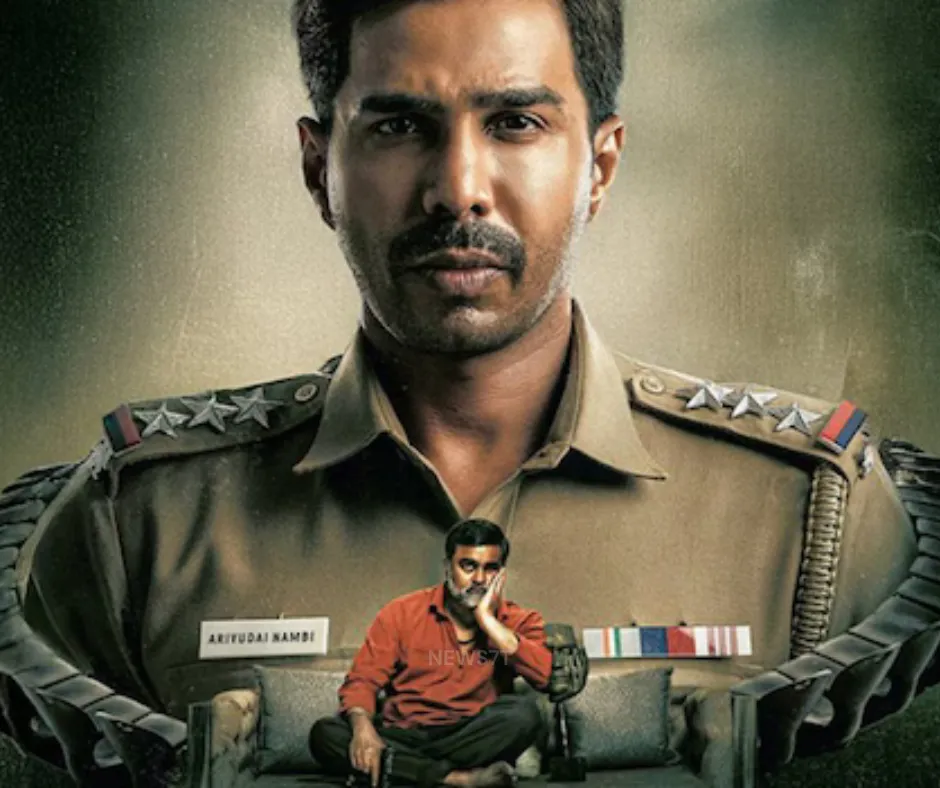
Aaryan is a film that attempts to blend the hallmarks of a classic murder mystery with psychological depth and social commentary, yet becomes uniquely memorable for the way its logic unravels. Let’s break down the experience of watching ‘Aaryan’—from its atmospheric opening to the uneven journey through its ethical minefields—by oscillating between perspectives, dissecting character arcs, scrutinizing philosophical overreach, and unpacking audience reactions into a 2000-word narrative that’s rich, thorough, and insightful.
Table of Contents
The Promise of Fire
In cinema, the best thrillers ignite curiosity at the very first frame. ‘Aaryan’ is no exception, opening with an enigmatic silhouette setting trees ablaze—a symbol, perhaps, of the chaos soon unleashed in Chennai. The mood is thick, the tension palpable. It whispers that something massive is about to happen.
This initial intrigue pivots sharply as Azhagar, played with haunting intensity by Selvaraghavan, hijacks a live television broadcast. What seems like a stunt soon reveals itself as the preamble to a grisly five-day serial killing narrative—an audacious promise from a failed writer who’s decided to force his story into public consciousness.
The “Howdunnit” Twist
Traditionally, murder mysteries are built around ‘whodunit’ conventions: the thrill arising from piecing together clues, suspect motives, and psychological tells. ‘Aaryan,’ however, takes a bold risk—it eliminates the mystery of ‘who’ from the outset, focusing instead on ‘how’ and, most crucially, ‘why.’ This sharp turn in narrative intent is a gamble. If successful, it can peel back layers of criminal psychology, presenting both cop and killer as worthy opponents in a battle of intellect.
For approximately 15 minutes, the film commands full attention. Azhagar’s philosophy, reflected in his cryptic on-air speeches and pre-recorded videos, feels at once theatrical and deeply unsettling. He sets out to murder five individuals, each revealed in advance, each given just one hour to be saved. The mechanics—a ticking clock, taunting clues—tickle that primal thrill embedded in crime fiction lovers.
Hunter Versus Hunted
Enter DCP Nambi, portrayed by Vishnu Vishal, a police officer sporting personal baggage—a divorce weighing down his conscience, even as the city’s fate rests in his hands. Here, the film stakes its tension on the cop-killer dynamic, adopting a ‘cat-and-mouse’ structure. Ideally, such a setup elevates both characters: the killer’s methodical taunts are met with the cop’s intuitive leaps, driving a crescendo as their intellects clash.
But Aaryan stumbles here. Nambi, intended as the film’s hero, is regrettably passive. His investigative prowess is almost entirely reactive, rarely rising to the occasion. Scenes in the mortuary illustrate this flaw: information is repeated pointlessly, draining urgency from the proceedings. Even the climactic confrontation, teed up to be cerebral, fizzles as Nambi fails to truly match wits with his adversary. Azhagar’s brilliance overshadows the supposed protagonist, tilting the movie’s balance off kilter.

The Motive Problem
Where ‘Aaryan’ tries to differentiate itself—its unique “twist”—is Azhagar’s justification for his serial murders. He claims his victims are “unsung heroes”—a nurse, a soldier, an activist—underappreciated by society. The chilling thesis: killing these noble souls will finally force public recognition of their value. It’s an idea the film obsesses over, returning to it repeatedly, but this rationale is both ethically and narratively questionable.
Despite Nambi advising against glorifying Azhagar’s actions, the film’s direction, music, and staging place the killer on a pedestal. Ghibran’s score even lends him superhero gravitas, muddying the moral waters. Critics, and viewers, are left to wrestle with the unease provoked by this skewed sense of justice: can acknowledging the overlooked really ever justify murder? The consensus is discomfort—’Aaryan’ not only struggles with logic but also risks unsettling its audience’s conscience, raising questions about its own ethical compass.
Mechanics and Shortcomings
The most effective segments—the first act in the TV studio, the anticipatory hour before each murder—are undermined by repetition and lack of investigative ingenuity. Each murder is orchestrated in advance, yet the police’s efforts to decode clues and rescue victims are unconvincing. Instead of a tense escalation, the film falls into redundant cycles: receive clue, scramble, fail to save, repeat.
Supporting characters—host Nayana (Shraddha Srinath), Nambi’s estranged wife—are sidelined, afforded little interiority, making them feel like pawns rather than active players in the drama. Opportunities for rich subplots or emotional depth are sacrificed for exposition.
Climactic Collapse
If the opening act is a firecracker, the final act is a damp squib. The film’s momentum falters dramatically as Azhagar’s motives are laid bare. Rather than a finale that ties the story together with psychological insight, ‘Aaryan’ dissolves into what feels like postmodern parody: a killer justified by the righteousness of his victims, a cop too slow to matter, and a society left grappling not with catharsis, but confusion and doubt.
Instead of clarity, the conclusion muddies the message—do we admire Azhagar’s twisted artistry, or recoil from the filmmakers’ moral ambiguity? The film challenges viewers not to seek meaning, but to question why the story takes such a lopsided turn.
The Good and The Flawed
Selvaraghavan’s chilling turn as Azhagar invites genuine dread and fascination. He imbues the failed writer with layers—rage, sorrow, philosophical conviction—but it’s all in service of a story that gives him too much, too early. Vishnu Vishal’s portrayal of Nambi is solid, but the script leaves him stranded, disconnected from meaningful growth or triumph.

Ghibran’s score deserves mention: it amplifies the tension, lends cinematic scope, and at times generously elevates moments that the writing cannot. Visually, the film captures Chennai with a noir sensibility, immersive in its use of urban spaces and shadow—a treat for genre fans.
Split Perspectives
Critics and fans both note ‘Aaryan’s’ strengths—a racy setup, effective mood, competent performances—but ultimately converge on its critical weakness: logic torpedoed by expediency. Audience forums echo frustration at the wasted potential, with the most engaging questions going unsatisfactorily answered.
A minority admire the film’s audacity and unpredictability, enjoying the surface thrills. Many, however, find themselves yearning for coherence: better stakes, sharper protagonists, a more reasoned exploration of crime and punishment.
Watching ‘Aaryan’ as a Social Puzzle
‘Aaryan’ inadvertently functions as a social puzzle, asking viewers to untangle its knotty threads. Instead of resolving its own questions, it forces us to reflect on broader issues: what makes a hero, how does society value its “do-gooders,” and where do we draw the line between protest and perversion?
The film’s unique approach—focusing not on ‘who’ killed, but ‘why’—may have set it apart, but its inability to deliver answers is precisely why it lingers uneasily in the memory. In a way, ‘Aaryan’ is not just a thriller gone off the rails; it’s a mirror to our own desire for understanding, for justice that isn’t merely manufactured, but earned.

Art, Ethics, and Unanswered Questions
Watching ‘Aaryan’ is like engaging with a riddle that purposely refuses to be solved. The story is atmospheric and compelling, yet its logic is self-defeating, rendering its complex characters into cogs in a machinery that ultimately collapses.
Selvaraghavan’s Azhagar is unforgettable, but for uncomfortable reasons: his warped rationalization sits at odds with any conventional sense of catharsis. Vishnu Vishal’s Nambi is sympathetic, though underutilized. The film is better at raising questions than answering them—about the legitimacy of protest, the cost of recognition, and the lure of forbidden acts.
In the end, ‘Aaryan’ is unique not because it solves the mystery, but because it leaves us with new mysteries, unsettling anxieties, and the knowledge that some stories are best left unresolved. It’s a cautionary tale for creators: ideas must be as sturdy as their messages, or risk being consumed by their own flawed logic.