
Loneliness and Memory Decline: Hidden Brain Health Risks
Disha11 min read

Loneliness and Memory has emerged as one of the most critical yet underestimated public health challenges of the 21st century, affecting millions of individuals across all age groups but particularly impacting older adults. In an era dominated by digital communication, urban migration, and increasingly fragmented social structures, many people find themselves emotionally disconnected despite being surrounded by others. This paradox of being “alone in a crowd” has led researchers to explore the deeper psychological and neurological consequences of loneliness.

One of the most important areas of study is its effect on brain health, especially memory and cognitive functioning. Scientific evidence now suggests that loneliness is not merely an emotional discomfort but a condition that can significantly influence how the brain works over time. It has been associated with stress-related hormonal changes, reduced cognitive stimulation, and even structural alterations in certain brain regions. However, while loneliness has been linked to weaker memory performance, its relationship with more severe cognitive disorders such as dementia remains complex and often misunderstood. Understanding this distinction is essential for developing effective strategies to promote mental well-being and healthy aging.
Table of Contents
What is Loneliness?
Loneliness is a deeply personal and subjective emotional experience that arises when there is a perceived gap between the social connections a person desires and those they actually have. It is important to recognize that loneliness is not simply about physical isolation or being alone; rather, it is about the quality and emotional depth of relationships. A person can have a wide social network and still feel lonely if those connections lack meaning, understanding, or emotional support.
Conversely, someone with limited social interactions may feel content and fulfilled if their relationships meet their emotional needs. Chronic loneliness can become a persistent state that affects not only mental health but also physical well-being. It has been linked to increased stress, weakened immune function, and a higher risk of various health conditions. The complexity of loneliness lies in its invisibility—it often goes unnoticed because it is not always outwardly visible, yet its impact can be profound and long-lasting.
Difference Between Loneliness and Social Isolation
Although loneliness and social isolation are often used interchangeably in everyday conversation, they are fundamentally different concepts with distinct implications for health and well-being. Social isolation is an objective condition characterized by a lack of social contacts, interactions, or relationships. It can be measured by factors such as the number of people in one’s social network or the frequency of social engagement. Loneliness, on the other hand, is a subjective feeling that reflects how a person perceives their social connections. This means that someone can be socially isolated without feeling lonely, and vice versa.
The distinction is important because research indicates that loneliness has a stronger and more direct impact on mental and cognitive health than social isolation alone. While increasing social interactions may help reduce isolation, addressing loneliness requires improving the quality of relationships and fostering meaningful emotional connections. This highlights the need for a more nuanced approach to tackling loneliness in society.
How Loneliness Affects the Brain
The impact of loneliness on the brain is both psychological and biological, influencing how the brain functions and responds to stress over time. When a person experiences prolonged loneliness, the body activates its stress response system, leading to the release of cortisol and other stress hormones. While these hormones are essential for short-term survival, chronic elevation can have harmful effects on the brain. One of the most affected areas is the hippocampus, which plays a crucial role in memory formation and learning. High levels of cortisol can damage neurons in this region, leading to difficulties in retaining and recalling information.
Additionally, loneliness can reduce neural plasticity—the brain’s ability to adapt and form new connections—which is essential for cognitive resilience. Over time, these changes can result in slower information processing, reduced attention span, and impaired decision-making abilities. This demonstrates that loneliness is not just an emotional state but a condition that can physically alter brain health.
Memory Loss: A Growing Concern
Memory loss has become an increasingly common concern, particularly among aging populations, as life expectancy continues to rise globally. While some degree of forgetfulness is a normal part of aging, significant or persistent memory problems can interfere with daily functioning and quality of life. Memory loss can manifest in various forms, ranging from mild cognitive impairment to more severe conditions that affect long-term memory and reasoning abilities. Several factors contribute to memory decline, including aging, genetics, lifestyle habits, and mental health conditions.
Chronic stress, lack of sleep, poor nutrition, and reduced mental stimulation can all accelerate cognitive decline. In recent years, there has been growing awareness of the role that emotional and social factors, such as loneliness, play in influencing memory function. Understanding these factors is essential for developing preventive strategies and promoting healthy cognitive aging.
Link Between Loneliness and Memory Weakness
A growing body of research has established a clear association between loneliness and weaker memory performance, suggesting that emotional well-being plays a significant role in cognitive health. Individuals who experience loneliness often have fewer opportunities for meaningful social interactions, which are essential for stimulating the brain and maintaining cognitive function. Social engagement involves activities such as conversations, shared experiences, and problem-solving, all of which help keep the brain active and improve memory retention.
In contrast, loneliness can lead to reduced cognitive stimulation, causing the brain to become less engaged over time. This lack of mental activity can result in difficulties with memory, attention, and learning. Moreover, loneliness is often accompanied by negative emotions such as sadness and anxiety, which can further impair cognitive function. While loneliness may weaken memory, it is important to note that it does not necessarily lead to rapid or irreversible cognitive decline.
What is Dementia?
Dementia is a complex and multifaceted condition characterized by a decline in cognitive abilities severe enough to interfere with daily life and independence. It is not a single disease but a collection of symptoms caused by various underlying conditions, the most common being Alzheimer’s disease. Dementia affects multiple aspects of cognitive function, including memory, reasoning, language, and problem-solving skills.
As the condition progresses, individuals may experience confusion, difficulty recognizing familiar people or places, and changes in behavior or personality. The impact of dementia extends beyond the individual, affecting families, caregivers, and healthcare systems. Despite its prevalence, dementia is often misunderstood, leading to misconceptions about its causes and progression. Distinguishing dementia from normal age-related memory changes is crucial for early diagnosis and effective management.

Does Loneliness Increase Dementia Risk?
One of the most widely debated questions in recent years is whether loneliness directly contributes to the development of dementia. While early studies suggested a possible link, more comprehensive research indicates that the relationship is not as straightforward as it may seem. Loneliness has been associated with lower baseline cognitive performance, meaning that individuals who feel lonely may start with slightly weaker memory and cognitive abilities.
However, longitudinal studies have shown that loneliness does not significantly accelerate the rate of cognitive decline over time. In other words, while loneliness may affect how well the brain functions initially, it does not necessarily increase the likelihood of developing dementia. This distinction is important because it shifts the focus from viewing loneliness as a direct cause of dementia to understanding it as a factor that influences overall cognitive health.
Research Findings on Loneliness and Cognitive Decline
Extensive research involving large populations has provided valuable insights into how loneliness affects cognitive health over time. Studies tracking thousands of older adults over several years have found that individuals who report higher levels of loneliness tend to have lower initial memory scores compared to those who are socially engaged. However, the rate at which their memory declines does not differ significantly from that of non-lonely individuals.
This suggests that loneliness impacts the starting point of cognitive ability rather than its progression. These findings highlight the importance of early intervention and maintaining social connections to support cognitive health. They also emphasize that other factors, such as genetics, physical health, and lifestyle choices, play a more significant role in determining the risk of dementia.
Impact on Elderly Population
The elderly population is particularly vulnerable to loneliness due to various life transitions and challenges, including retirement, loss of loved ones, declining health, and reduced mobility. These changes can lead to a decrease in social interactions and a sense of disconnection from society. Loneliness in older adults is associated with a range of negative outcomes, including depression, anxiety, and cognitive decline.
It can also affect physical health, increasing the risk of conditions such as heart disease and weakened immunity. Addressing loneliness in this population is essential for promoting healthy aging and improving overall quality of life. Community programs, social activities, and support networks can play a crucial role in reducing loneliness and enhancing well-being among older adults.
Emotional and Psychological Effects
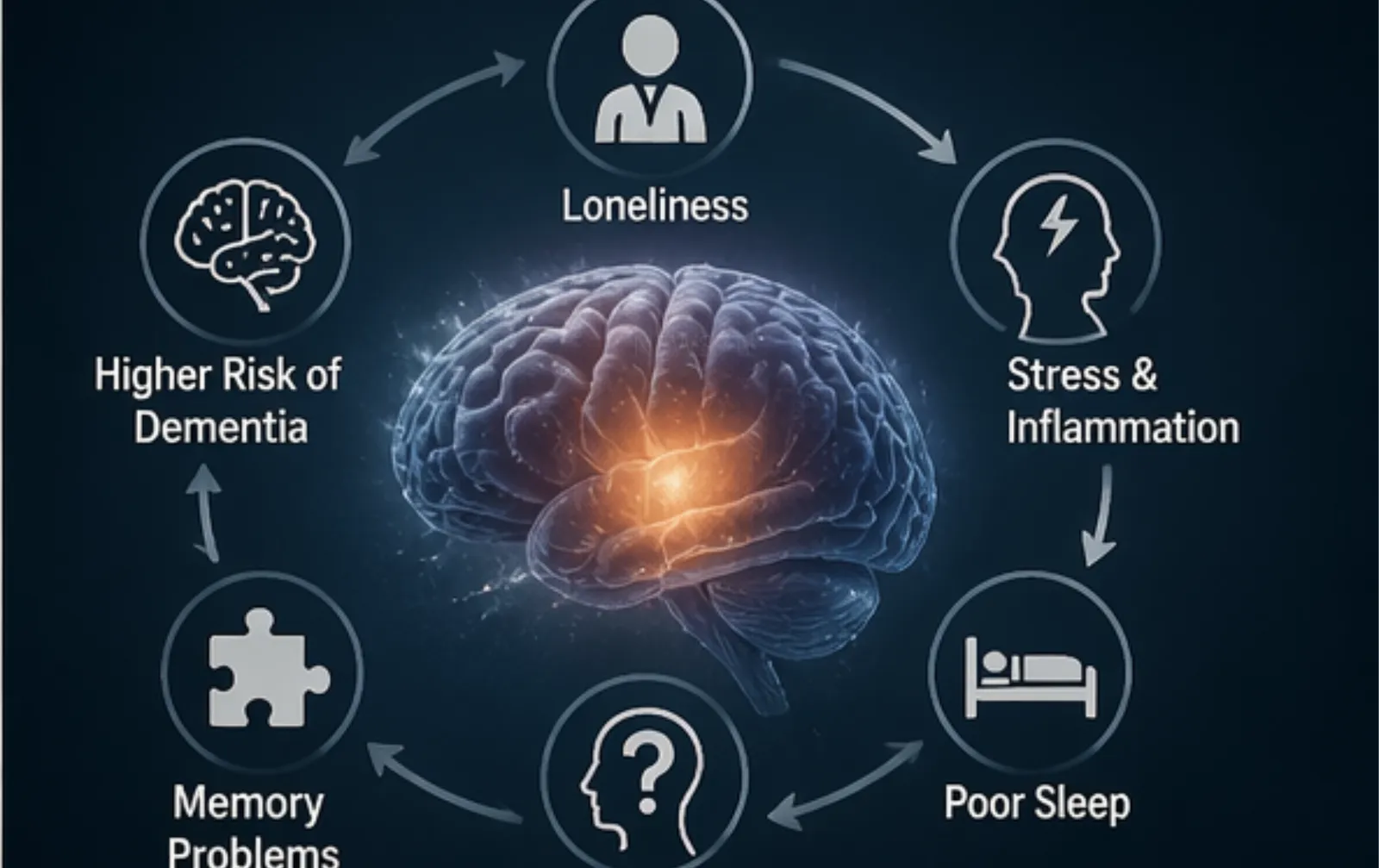
Loneliness has profound emotional and psychological effects that can significantly impact an individual’s overall well-being. It is closely linked to mental health conditions such as depression, anxiety, and low self-esteem, all of which can further contribute to cognitive difficulties. For example, depression can impair concentration, reduce motivation, and negatively affect memory, creating a cycle that reinforces feelings of loneliness.
Anxiety, on the other hand, can lead to excessive worry and stress, which can interfere with cognitive processes. Over time, these emotional challenges can reduce an individual’s ability to engage in social activities, further exacerbating loneliness. Recognizing and addressing the psychological aspects of loneliness is therefore essential for improving both mental and cognitive health.
Role of Lifestyle Factors
Lifestyle factors play a critical role in shaping how loneliness affects cognitive health and overall well-being. Poor lifestyle habits, such as physical inactivity, unhealthy diet, inadequate sleep, and excessive screen time, can amplify the negative effects of loneliness. For instance, a lack of physical activity can reduce blood flow to the brain, impairing cognitive function, while poor nutrition can deprive the brain of essential nutrients needed for optimal performance.
On the other hand, adopting healthy habits can help mitigate the impact of loneliness. Regular exercise, balanced nutrition, and sufficient sleep have been shown to improve mood, enhance cognitive function, and reduce stress. Engaging in hobbies, learning new skills, and participating in social activities can also provide mental stimulation and emotional fulfillment.
Importance of Social Connections
Social connections are a fundamental aspect of human life and play a crucial role in maintaining cognitive health and emotional well-being. Meaningful relationships provide a sense of belonging, support, and purpose, all of which contribute to a healthier mind and body. Engaging in social interactions stimulates the brain, enhances memory, and improves problem-solving skills. Activities such as conversations, group discussions, and shared experiences help keep the brain active and resilient. Building and maintaining strong social connections should therefore be a priority, especially for individuals at risk of loneliness. This can be achieved through community involvement, volunteering, and maintaining regular contact with friends and family.
Gender and Health Differences
Research has shown that loneliness can affect men and women differently, both in terms of emotional experience and health outcomes. Women are generally more likely to report feelings of loneliness, possibly due to greater emotional awareness and willingness to express such feelings. Men, on the other hand, may be less likely to acknowledge loneliness but may experience more severe physical health consequences as a result. These differences highlight the need for gender-specific approaches in addressing loneliness and its impact on cognitive health. Understanding these variations can help in designing targeted interventions that effectively address the unique needs of different groups.
Prevention Strategies
Preventing loneliness requires a comprehensive approach that addresses both social and emotional factors. Staying socially active, maintaining regular contact with loved ones, and participating in community activities can help reduce feelings of loneliness. Technology can also play a role by enabling communication and access to social networks, although it should not replace face-to-face interactions entirely. Support groups, counseling, and mental health services can provide additional assistance for individuals experiencing chronic loneliness. Early intervention is key to preventing the long-term effects of loneliness on mental and cognitive health.
Role of Mental Health Awareness
Raising awareness about mental health is essential for addressing loneliness and its impact on individuals and communities. Educating people about the importance of social connections and emotional well-being can help reduce stigma and encourage individuals to seek help when needed. Mental health awareness campaigns, community programs, and educational initiatives can play a vital role in promoting understanding and support. By creating an environment where people feel comfortable discussing their feelings, society can take meaningful steps toward reducing loneliness and improving overall well-being.
How to Improve Brain Health
Improving brain health involves a holistic approach that includes physical, mental, and social activities. Regular exercise helps increase blood flow to the brain and promotes the growth of new neurons. Cognitive activities such as reading, puzzles, and learning new skills can enhance memory and problem-solving abilities. Social interactions provide emotional support and mental stimulation, which are essential for maintaining cognitive function. A balanced diet rich in nutrients, along with adequate sleep, further supports brain health. By adopting these practices, individuals can strengthen their cognitive abilities and reduce the impact of loneliness.
Balancing Social and Mental Well-being
In conclusion, loneliness is a powerful factor that can influence memory and overall mental health, but it does not necessarily increase the risk of developing dementia. While it may weaken memory and reduce cognitive performance initially, its effect on long-term cognitive decline appears to be limited. Nevertheless, loneliness remains a serious issue that can affect emotional well-being, physical health, and quality of life.
Addressing loneliness requires a collective effort that includes building strong social connections, promoting mental health awareness, and encouraging healthy lifestyle choices. By understanding and addressing the complexities of loneliness, individuals and communities can work toward creating a more connected, supportive, and mentally healthy society.