
Nagasaki Day 2026: History, Global Impact, and the Ongoing Call for World Peace
Disha14 min read
Nagasaki Day is observed every year on August 9 to commemorate one of the most pivotal and devastating moments in modern human history—the atomic bombing of the Japanese city of Nagasaki in 1945. Occurring three days after the destruction of Hiroshima, the detonation of the plutonium bomb nicknamed “Fat Man” devastated Nagasaki, resulting in the immediate loss of over 70,000 lives and ushering humanity into the nuclear age. Today, Nagasaki Day serves not only as a solemn memorial to the tens of thousands of victims and survivors, known as Hibakusha, but also as a powerful global call for nuclear disarmament, peace education, and international solidarity against the proliferation of weapons of mass destruction.
Table of Contents
What Happened on August 9, 1945?
To fully understand the weight of Nagasaki Day, one must look back at the dramatic climax of World War II in the Pacific Theatre. By August 1945, Nazi Germany had surrendered in Europe, but the War in the Pacific continued with intense fiercely fought engagements across islands and seas. The Allied powers, led by the United States, sought a rapid end to the conflict to avoid a costly ground invasion of the Japanese mainland.
The Manhattan Project and the Birth of Nuclear Weapons
The foundation for the tragic events of August 1945 was laid years earlier with the establishment of the Manhattan Project in 1942. This secret research initiative, spearheaded by the United States with contributions from Great Britain and Canada, assembled top physicists, engineers, and mathematicians under the leadership of J. Robert Oppenheimer and Major General Leslie Groves. Their goal was to develop the world’s first nuclear weapons before Nazi Germany could do so.
On July 16, 1945, the Trinity Test in the desert of New Mexico successfully demonstrated the catastrophic power of nuclear fission. Less than a month later, this newly unlocked technology was deployed operationally in combat against Japanese cities, forever changing the nature of warfare and global geopolitics.
Why Nagasaki? The Selection of the Target City
Nagasaki Day reminds us that Nagasaki was not originally the primary target for the second atomic attack. The Allied Target Committee had identified several major Japanese military and industrial hubs, prioritizing locations that had remained largely untouched by conventional aerial bombing campaigns so that the physical and psychological impacts commemorated on Nagasaki Day could be accurately measured.
The primary target for the August 9 mission was Kokura (now part of Kitakyushu City), a major center for munitions production, making the story behind Nagasaki Day a twist of tragic fate. Nagasaki was designated only as the secondary target, an important commercial port city with major industrial plants—including the Mitsubishi Steel and Arms Works—whose history we solemnly reflect upon every year on Nagasaki Day.
The Mission of “Bockscar” and the Deployment of “Fat Man”
On the morning of the event we remember on Nagasaki Day, August 9, 1945, a B-29 Superfortress bomber named Bockscar, piloted by Major Charles W. Sweeney, departed from Tinian Island carrying “Fat Man”—an implosion-type nuclear weapon utilizing a plutonium-239 core. The historical accounts shared on every Nagasaki Day highlight that the bomb weighed approximately 10,800 pounds and possessed an explosive yield equivalent to roughly 21 kilotons of TNT, making it significantly more powerful than the uranium-based “Little Boy” bomb dropped on Hiroshima three days earlier.
Upon arriving over Kokura, Bockscar encountered thick haze, smoke, and cloud cover that rendered visual targeting impossible according to strict mission protocols. After making three failed passes over Kokura while running low on fuel, Sweeney diverted the aircraft toward Nagasaki, setting the stage for what would later be observed worldwide as Nagasaki Day.
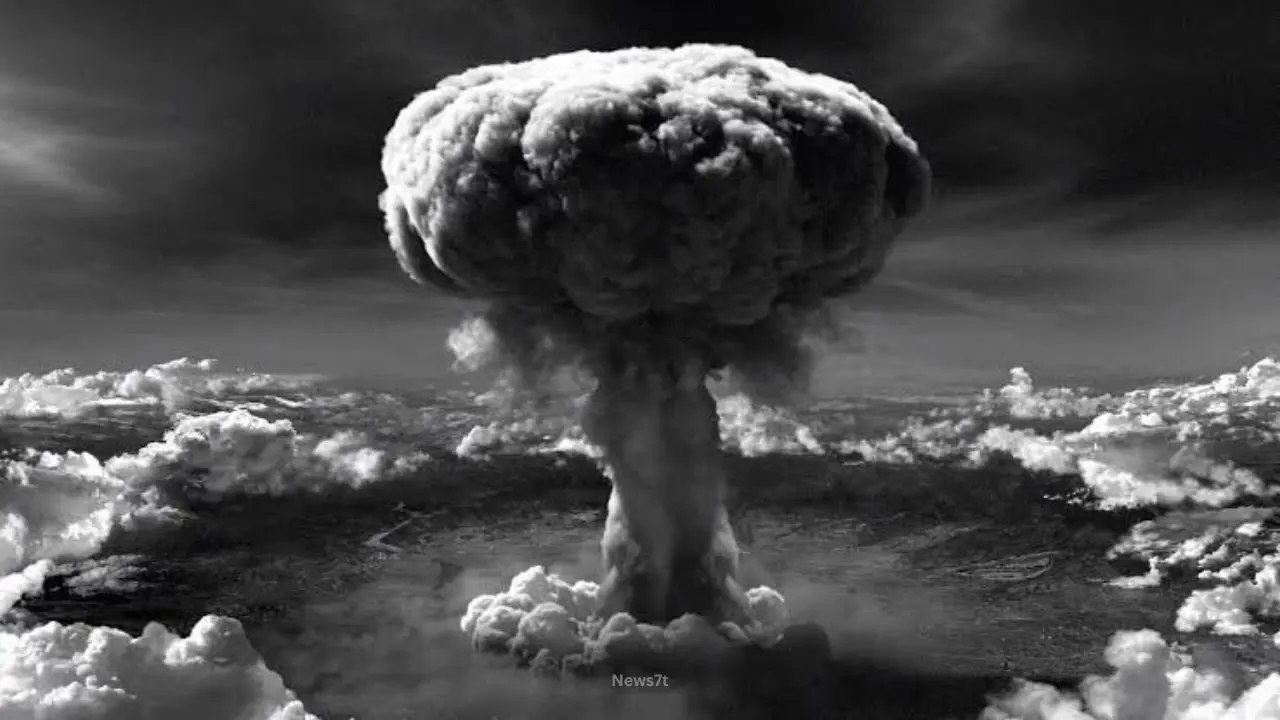
Arriving over Nagasaki shortly after 11:00 AM, the crew found heavy cloud cover there as well. However, a break in the clouds over the Urakami Valley permitted bomb commander Captain Frederick Ashworth to visually acquire the target area—a pivotal moment in the tragedy commemorated on Nagasaki Day. At 11:02 AM local time, the exact minute honored every year on Nagasaki Day, “Fat Man” was released, detonating approximately 1,650 feet (500 meters) above the industrial valley between the Mitsubishi plants and altering world history forever, a truth reflected upon on each Nagasaki Day.
The Immediate Destruction and Human Cost
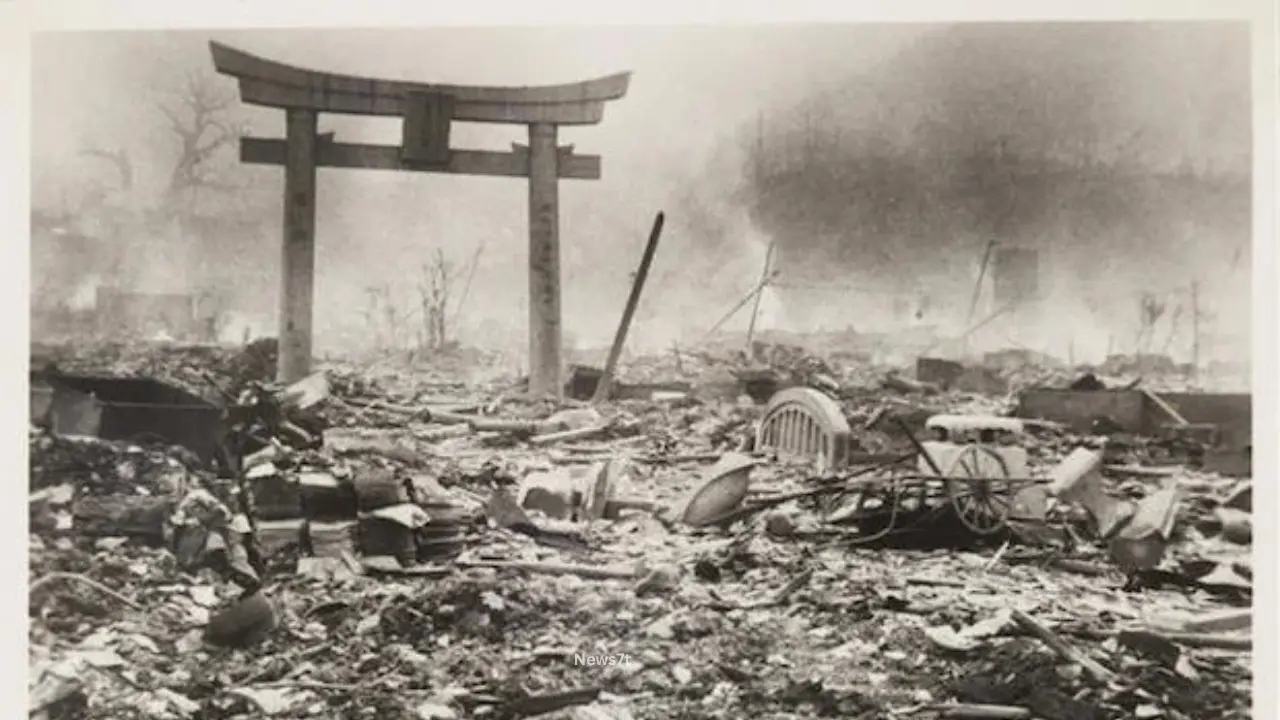
The detonation of “Fat Man” transformed Nagasaki into an inferno in a fraction of a second. The physical geography of Nagasaki, characterized by steep hills and narrow valleys, restricted the blast to the Urakami Valley, preventing total annihilation across the entire city; however, within the valley itself, the destruction was absolute.
Ground Zero: The Shockwave, Heat, and Firestorm
At the moment of burst, the temperature at the hypocenter reached several million degrees Celsius, creating a blinding flash of light followed by a thermal fireball that radiated surface temperatures estimated at over 3,000 to 4,000 degrees Celsius (5,400 to 7,200 degrees Fahrenheit). Metal, stone, and human tissue evaporated instantaneously near Ground Zero.
Simultaneously, a massive pressure wave expanding faster than the speed of sound tore through the valley, flattening wooden structures, crushing concrete buildings, and hurling debris for miles. Seconds later, a hyper-heated firestorm developed, burning everything flammable across an area of approximately 2.6 square miles.
Immediate Casualties and Destruction of Infrastructure
The devastating human toll remembered on Nagasaki Day reveals that by the end of 1945, an estimated 70,000 to 80,000 people in Nagasaki had died as a direct result of the blast, heat, and acute radiation. The vast majority of victims honored on Nagasaki Day were non-combatant civilians, including thousands of women, children, school students, and elderly residents. The blast also killed foreign laborers, including forced recruits from Korea and China, as well as several Allied prisoners of war who were detained in camps nearby.
Critical city infrastructure collapsed instantly, a central focus of historical reflections on Nagasaki Day. Medical facilities located near Ground Zero, including the Nagasaki Medical College and Nagasaki University Hospital, were completely ruined, killing a large portion of the city’s doctors, nurses, and medical personnel just when they were needed most—a tragedy that continues to emphasize the call for peace on every Nagasaki Day.
The Medical Crisis in the Shadow of Radiation
In the hours following the explosion, rescue efforts were severely crippled by intense fires, destroyed roads, and a total loss of communications. Thousands of severely burned and injured survivors staggered through the ruins searching for water, shelter, and missing family members.
Medical relief workers who entered the city from neighboring rural regions faced a mysterious and terrifying phenomenon: individuals who suffered no visible physical burn wounds or bone fractures rapidly fell ill withhigh fevers, severe nausea, extreme fatigue, hemorrhaging, and rapid hair loss. This was the first widespread clinical observation of acute radiation sickness, caused by exposure to high doses of ionizing gamma rays and neutron radiation released during the fission reaction.
The Long-Term Consequences and the Hibakusha
The tragic legacy commemorated on Nagasaki Day extends far beyond the immediate aftermath of August 9, 1945. For decades after the bombing, survivors—known in Japan as Hibakusha (atomic bomb-affected people)—carried both invisible radiation-induced illnesses and profound psychological burden.
Acute Radiation Syndrome and Delayed Health Effects
In the months and years that followed, survivors experienced markedly elevated rates of medical complications. Epidemiological studies conducted over subsequent decades revealed a dramatic increase in:
- Leukemia: Rates peaked among survivors roughly five to six years after exposure.
- Solid Cancers: Elevated risks for cancers of the thyroid, lung, breast, stomach, and colon persisted throughout the survivors’ lives.
Non-Cancer Conditions: Increased incidences of cataracts, cardiovascular diseases, thyroid dysfunction, and immune system impairment. - Teratogenic Effects: Children exposed in utero suffered higher rates of microcephaly, developmental delays, and growth impairments.
Psychological Trauma and Social Stigma
In addition to physical illnesses, the Hibakusha faced severe social and economic hardships in post-war Japan, a solemn truth recalled during every Nagasaki Day observance. Misconceptions regarding the contagiousness of radiation sickness and fears of hereditary defects led to widespread discrimination in employment, marriage, and community life—struggles that are highlighted globally on Nagasaki Day to spread awareness and empathy. Many survivors hid their backgrounds to protect their children from social ostracization.
The emotional burden of losing entire families in a single instant, coupled with lifelong anxieties over potential cancer diagnoses, left deep psychological scars across generations of Nagasaki residents. Reflecting on these profound human challenges on Nagasaki Day reinforces the ongoing commitment to peace, ensuring that the quiet suffering of the Hibakusha is never forgotten on Nagasaki Day or any other day.
The Nobel Peace Prize Recognition for Hibakusha (Nihon Hidankyo)
Despite their immense suffering, the Hibakusha transformed their personal grief into global advocacy. Organized under national bodies such as Nihon Hidankyo (Japan Confederation of A- and H-Bomb Sufferers Organizations), survivors dedicated their lives to traveling the world, sharing their firsthand testimonials, and demanding the complete abolition of nuclear weapons so that no future generations would endure their fate.
In recognition of their decadelong tireless grassroots efforts to warn humanity of the existential dangers of nuclear weapons, Nihon Hidankyo was awarded the Nobel Peace Prize, reaffirming the historical significance of their message on every Nagasaki Day.
Geopolitical Aftermath and the End of World War II
The atomic strikes on Hiroshima and Nagasaki brought a sudden and dramatic conclusion to World War II, while simultaneously reshaping the global balance of power and defense strategies.
Imperial Japan’s Surrender and the Post-War World Order
Six days after the bombing of Nagasaki, on August 15, 1945, Emperor Hirohito delivered a historic radio broadcast announcing Japan’s unconditional surrender to the Allied powers, citing the destructive capability of “a new and most cruel bomb.” The formal Instrument of Surrender was signed aboard the USS Missouri in Tokyo Bay on September 2, 1945, officially ending World War II.
The unconditional surrender marked the collapse of Imperial Japan and initiated a major political, economic, and social transformation of the country under Allied occupation led by General Douglas MacArthur. Japan drafted a new democratic constitution in 1947, featuring the famous Article 9, in which the nation officially renounced war as a sovereign right and pledged never to maintain land, sea, or air forces for offensive purposes.
The Debate Over the Necessity of the Atomic Bombings
The decision to drop atomic weapons on Nagasaki and Hiroshima remains one of the most fiercely debated historical topics in international relations and ethics:
- The Military Justification Argument: Proponents argue that the atomic bombs were necessary to force an immediate Japanese surrender without launching Operation Downfall—the planned Allied ground invasion of Japan. Military planners estimated that an invasion could have resulted in hundreds of thousands of Allied casualties and millions of Japanese military and civilian deaths. From this viewpoint, the atomic bomb ended the war quickly and preserved lives on both sides.
- The Ethical and Diplomatic Critique: Critics argue that Imperial Japan was already on the verge of military collapse due to naval blockades, continuous conventional firebombing, and the Soviet invasion of Manchuria on August 8, 1945. Opponents assert that the second bomb on Nagasaki was unnecessary, overly hasty, and ethically indefensible, serving primarily as a geopolitical signal to the Soviet Union at the dawn of the Cold War.
The Beginning of the Cold War Nuclear Arms Race
Rather than deterring future weapon development, the nuclear tragedy commemorated on Nagasaki Day accelerated an intense arms race between the world’s superpower blocs. Recognizing that the United States possessed an unprecedented strategic advantage after the events remembered on Nagasaki Day, the Soviet Union mobilized immense resources to develop its own atomic bomb, successfully testing it in August 1949.
Within years, both nations expanded their arsenals from fission weapons to far more destructive thermonuclear weapons, creating thousands of intercontinental ballistic missiles capable of wiping out civilization—a perilous legacy that Nagasaki Day warnings urge humanity to undo. Today, global observances on Nagasaki Day continue to remind leaders worldwide of the grave dangers posed by unchecked nuclear proliferation.
From Ashes to a Symbol of Global Peace
In the decades following World War II, the people of Nagasaki transformed their ruined city into a vibrant hub of culture, industry, and international peace activism.
Rebuilding Nagasaki: Resilience and Urban Renewal
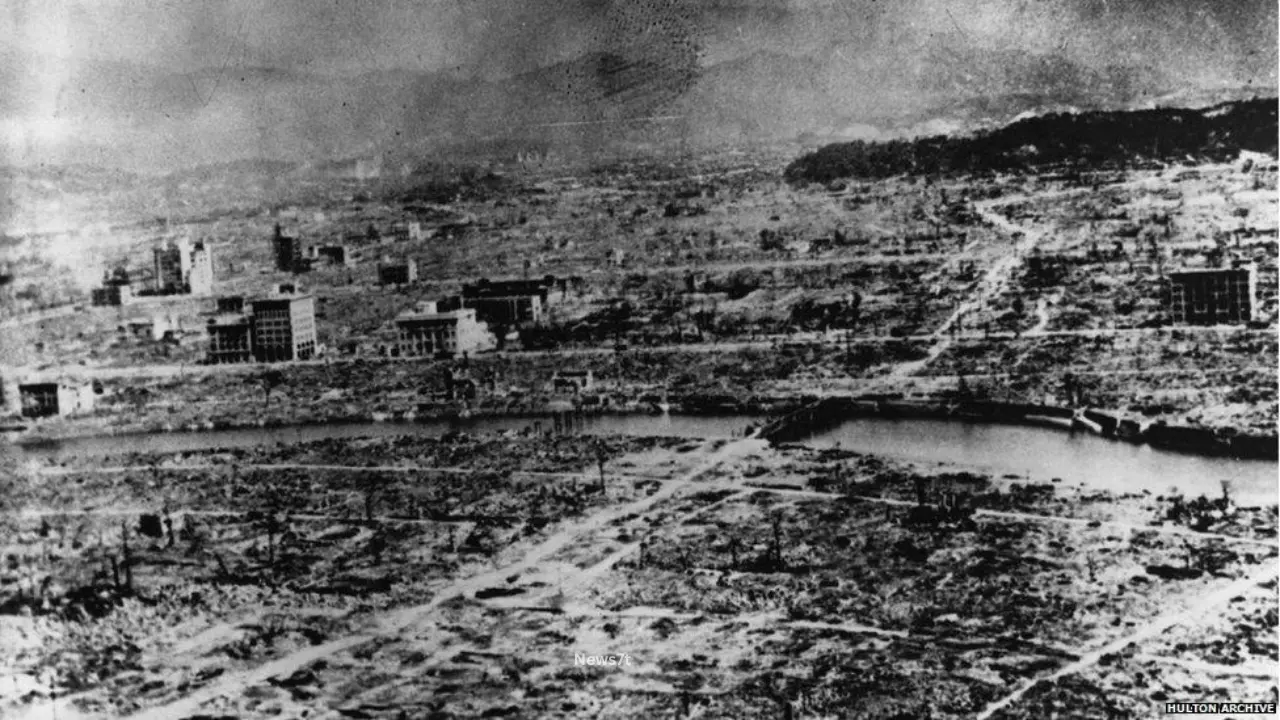
Reconstruction in Nagasaki began amidst severe post-war scarcity. Initial fears suggested that radiation would render the city uninhabitable for decades. However, natural weathering, decontamination efforts, and rapid urban clearance allowed rebuilding to progress steadily.
The Urakami district was rebuilt with modern residential housing, educational institutions, and commercial infrastructure. The famed Urakami Cathedral, which was completely destroyed near Ground Zero, was rebuilt in 1959 as a symbol of community resilience and faith.
The Nagasaki Peace Park and Peace Memorial Hall
At the center of the hypocenter stands the Nagasaki Peace Park, established in 1955 to ensure that the memory of August 9, 1945, remains alive for generations to come.
- The Peace Statue: Sculpted by Seibo Kitamura, the iconic 10-meter-tall bronze statue features a right hand pointing to the sky to signify the threat of nuclear weapons, a left hand extended horizontally in a gesture of eternal peace, and gently closed eyes offering prayers for the victims.
- Fountain of Peace: Built in memory of the victims who died desperately searching for clean water to soothe their severe thermal burns.
- Nagasaki Atomic Bomb Museum: Exhibits real artifacts, melted glass, damaged structural remains, and personal belongings of victims, offering visitors a raw, educational experience about the human cost of nuclear war.
Key Symbols of Nagasaki Peace Park:
- The Peace Statue — Warning of nuclear threat & prayer for universal peace
- Fountain of Peace — Tribute to burn victims seeking water
- Hypocenter Cenotaph — Marks exact spot under atomic burst
- Bell of Nagasaki — Rings out for peace and remembrance The Annual Nagasaki Peace Memorial Ceremony
Every year on August 9, the city hosts the Nagasaki Peace Memorial Ceremony at the Peace Park. Attended by Japanese government officials, international diplomats, survivors, youth delegates, and citizens, the ceremony includes: - Silence at 11:02 AM: A minute of silence observed across the city, signaled by the ringing of the Bell of Nagasaki.
- The Nagasaki Peace Declaration: Delivered by the Mayor of Nagasaki, appealing to world leaders for the immediate abolition of nuclear weapons and the cessation of armed global conflict.
- Prime Minister’s Address: Reaffirming Japan’s commitment to the Three Non-Nuclear Principles (non-possession, non-production, and non-introduction of nuclear weapons).
- Wreath Laying and Release of Doves: Symbolizing global harmony and collective mourning.
Nuclear Threats in the 21st Century
As Nagasaki Day is observed today, international security experts warn that the danger of nuclear weapon usage is higher than at any point since the peak of the Cold War. Geopolitical instability, modernizations of nuclear stockpiles, and rising regional conflicts have placed severe strain on the international non-proliferation regime.
Modernization of Nuclear Arsenals and Global Tensions
While the total number of warheads has declined since the 1980s peak due to bilateral treaties between the United States and Russia, all nine nuclear-armed states (United States, Russia, China, France, United Kingdom, Pakistan, India, Israel, and North Korea) are actively upgrading their nuclear capabilities.
Global Nuclear Arsenal Overview:
- Total Estimated Warheads Worldwide: ~12,100
- Deployed Operational Warheads: ~3,900
- High-Operational-Alert Status: ~2,100
Developments in hypersonic delivery vehicles, low-yield tactical warheads, autonomous weapons control systems, and counter-force strike technologies have heightened the risk of accidental launch, miscalculation, or rapid escalation during crises.
The Role of the Treaty on the Non-Proliferation of Nuclear Weapons
The Treaty on the Non-Proliferation of Nuclear Weapons (NPT), established in 1968, remains the cornerstone of global disarmament and non-proliferation efforts. Built upon three fundamental pillars—non-proliferation, disarmament, and the peaceful use of nuclear energy—the treaty is designed to prevent the spread of nuclear capabilities while committing recognized nuclear states to good-faith disarmament negotiations.
In recent years, however, review conferences for the NPT have faced challenges due to growing geopolitical rivalries, raising concerns among non-nuclear states about the commitment of major powers to disarmament goals.
Educating Future Generations in a World Without Living Survivors
With the average age of remaining Hibakusha now exceeding 85 years, the city of Nagasaki, alongside educational institutions worldwide, is pioneering digital archiving initiatives:
A-Bomb Memory Successors: Young volunteers in Nagasaki undergo training to inherit the stories, testimonies, and historical documents of specific Hibakusha, ensuring they can deliver firsthand-style presentations to schools and visitors in the future.
Virtual Reality (VR) and Digital Archiving: Interactive 3D modeling and immersive VR experiences allow students globally to explore pre-blast and post-blast Nagasaki, fostering empathy and historical understanding among younger audiences.
Youth Peace Messaging: International student exchanges and peace conferences held annually in Nagasaki empower young activists to champion disarmament initiatives in their home countries.
International Policy Steps Toward Universal Disarmament
Achieving long-term global stability and reducing nuclear risks requires actionable steps by international bodies and sovereign governments:
- Re-engaging in Bilateral and Multilateral Arms Control: Restoring strategic stability dialogues between major nuclear powers to establish clear communications channels, risk-reduction measures, and warhead limits.
- Universalizing the Comprehensive Nuclear-Test-Ban Treaty (CTBT): Securing full ratification from key states to permanently ban all nuclear explosive testing.
- Investing in Verification Technologies: Developing advanced satellite monitoring, seismic tracking, and forensic auditing to guarantee compliance with future disarmament treaties.
- Promoting Peace Education: Incorporating nuclear ethics, history, and conflict resolution into national curricula around the world to build an informed global public committed to peace.
The Unwavering Lesson of Nagasaki Day
Nagasaki Day stands as a powerful reminder of both human fragility and human resilience. The atomic destruction of Nagasaki on August 9, 1945, serves as a solemn lesson on the consequences of total war and unchecked weapon development.
As humanity navigates an increasingly complex global landscape, the message delivered from Nagasaki’s Peace Park remains vital: peace cannot be secured through weapons of mass destruction, but through mutual understanding, diplomatic engagement, and an unwavering commitment to a world free from nuclear threats. By honoring the victims, listening to the wisdom of the Hibakusha, and educating future generations, the world honors the pledge inscribed at Ground Zero: “Let Nagasaki be the last place on Earth to suffer an atomic bomb.”