
Hindi Diwas: Breaking the Powerful Silence and Celebrating the Inspiring Strength of Hindi Language and Literature
Disha10 min read
Hindi Diwas is an important occasion that celebrates the Hindi language, its rich literary heritage, cultural significance, and contribution to Indian society. Every year, Hindi Diwas is observed on 14 September to recognize the importance of Hindi and encourage people to respect, learn, speak, and promote the language. Hindi is not merely a means of communication; it represents India’s diverse culture, traditions, emotions, history, and literary imagination. In an increasingly globalized world, protecting and promoting Indian languages has become more important than ever.
The celebration of Hindi Diwas reminds us that languages are powerful carriers of identity and culture. Hindi has connected millions of people across different regions and communities and has played a significant role in India’s social, cultural, educational, and literary development. However, despite its widespread use, Hindi faces challenges in the modern digital and professional world. Therefore, Hindi Diwas provides an opportunity to understand these challenges and discover powerful ways to give Hindi a stronger place in contemporary society.
Table of Contents
What Is Hindi Diwas?
Hindi Diwas is celebrated annually on 14 September in India. The day commemorates the adoption of Hindi written in the Devanagari script as one of the official languages of the Union of India.
The Constituent Assembly adopted Hindi in the Devanagari script on 14 September 1949. Later, the Constitution of India came into effect on 26 January 1950. Article 343 states that the official language of the Union shall be Hindi in Devanagari script. The purpose of Hindi Diwas is not to diminish the importance of other Indian languages. Instead, it highlights the significance of Hindi while encouraging linguistic diversity and respect for all languages spoken across India.
Why Is Hindi Diwas Important?
The importance of Hindi Diwas goes far beyond celebrating a language for one day. Hindi has a major role in Indian literature, cinema, journalism, education, public communication, and popular culture.
Hindi literature has produced remarkable poets, novelists, essayists, journalists, and thinkers. Writers such as Munshi Premchand, Mahadevi Verma, Ramdhari Singh Dinkar, Harivansh Rai Bachchan, Suryakant Tripathi ‘Nirala’, Jaishankar Prasad, and many others have enriched Hindi literature with unforgettable works.
Through Hindi Diwas, younger generations can understand how language influences culture and society. It also encourages students to appreciate Hindi literature instead of considering the language only as a school subject.
The Powerful History of Hindi
The history of Hindi is closely connected with the linguistic and cultural development of northern and central India. Hindi developed through various stages and has been influenced by Sanskrit, Prakrit, Apabhramsha, Persian, Arabic, Turkish, English, and several regional languages. Over centuries, Hindi evolved into different forms and dialects, including Awadhi, Braj, Bhojpuri, Bundeli, and others. These linguistic traditions contributed greatly to India’s literature and cultural expression.
The Bhakti movement played a particularly important role in the development of popular Indian literature. Saints and poets such as Kabir, Tulsidas, Surdas, and others used languages accessible to ordinary people. Their works carried powerful messages about devotion, morality, equality, and humanity. Today, Hindi continues to evolve by adopting new vocabulary and adapting to changing social and technological environments.
Hindi and Indian Literature
Hindi literature is one of the strongest pillars of India’s cultural heritage. It includes poetry, novels, short stories, drama, essays, criticism, journalism, and children’s literature. Munshi Premchand is widely remembered for his realistic portrayal of Indian society. His stories and novels explored poverty, social inequality, rural life, human relationships, and moral struggles.
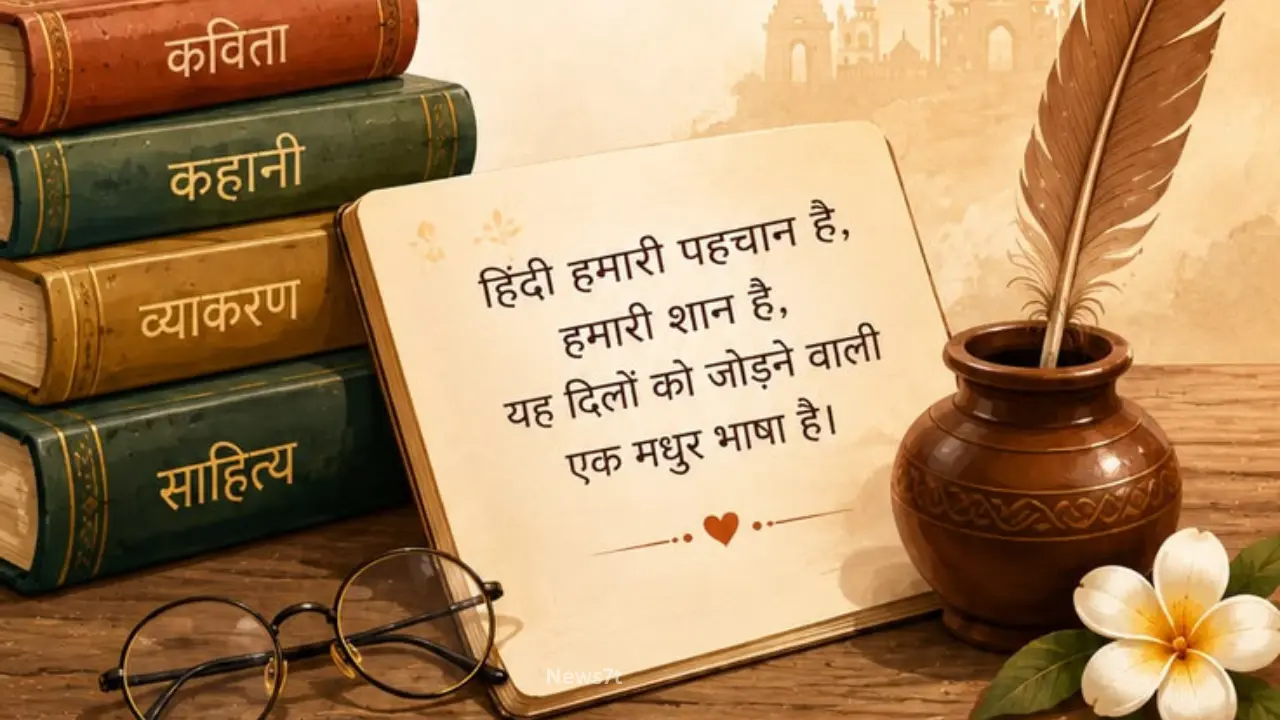
Poetry has also played an important role in Hindi literature. Harivansh Rai Bachchan’s poetry connected deeply with readers through its emotional and philosophical themes. Ramdhari Singh Dinkar became famous for powerful patriotic and inspirational poetry. Hindi Diwas is an excellent opportunity to introduce students and young readers to these literary treasures. Reading Hindi literature can help people understand India’s history, social challenges, traditions, and changing values.
Hindi Diwas and Education
Education plays a major role in promoting Hindi. Schools and colleges across India organize activities around Hindi Diwas, including essay competitions, debates, poetry recitations, speeches, quizzes, storytelling, and handwriting competitions. Such activities make language learning more engaging. Instead of limiting Hindi to textbooks and examinations, students can be encouraged to use Hindi creatively.
Digital education has also created new opportunities. Hindi educational videos, podcasts, blogs, online courses, e-books, and social media content are reaching audiences that traditional educational institutions may not always reach. If students are encouraged to create content in Hindi, they can contribute directly to the future growth of the language.
The Negative Challenges Facing Hindi
Although Hindi is widely spoken and understood, it still faces several challenges. One major challenge is the growing dominance of English in higher education, technology, corporate communication, and professional environments. Many young people believe that English is more useful for career development, which can sometimes lead to Hindi being treated as less prestigious.
Another challenge is the lack of high-quality digital resources in Hindi in certain specialized fields. Scientific research, advanced technology, medicine, programming, and professional education often have significantly more resources available in English. Social media has created both opportunities and challenges. Hindi is widely used online, but excessive use of Roman Hindi can sometimes reduce familiarity with the Devanagari script. These challenges do not mean that Hindi is declining. Instead, they show where stronger efforts are needed.
Hindi in the Digital Age
Technology has completely changed the way languages are used. Smartphones, social media, artificial intelligence, voice assistants, translation tools, and digital publishing have opened new possibilities for Hindi. Today, users can type Hindi using keyboards, voice-to-text tools, and transliteration systems. Hindi content is available on platforms such as YouTube, Instagram, websites, podcasts, and online learning platforms.
This makes the digital world one of the most powerful opportunities for promoting Hindi. Hindi Diwas can therefore become more than a traditional celebration. It can inspire creators, developers, teachers, writers, and students to produce better Hindi content online.
Hindi and Social Media
Social media has played a major role in increasing the visibility of Hindi. Millions of people consume Hindi videos, memes, educational posts, stories, news, poetry, and entertainment content every day. Creators are increasingly using Hindi to connect with audiences in a more natural and emotional way. Hindi content can reach people who may not feel comfortable consuming complicated English-language material.
At the same time, creators should focus on maintaining good language quality. Mixing Hindi and English is common in informal communication, but traditional Hindi vocabulary and Devanagari writing should also remain visible. This balance can help Hindi remain relevant without losing its identity.
The Role of Hindi Literature in Society
Literature does more than entertain people. It reflects society and encourages people to think about difficult issues. Hindi literature has addressed subjects such as poverty, caste, gender inequality, freedom, political change, family relationships, rural life, urbanization, and human psychology.
Writers have often used stories to give voice to people whose experiences were ignored by mainstream society. Therefore, promoting Hindi literature means promoting critical thinking, empathy, creativity, and cultural awareness. Hindi Diwas provides a valuable opportunity to encourage people to read not only famous classics but also contemporary Hindi writers.
How Young People Can Promote Hindi
Young people have the power to shape the future of Hindi. They can promote the language through simple but meaningful actions. They can read Hindi books, write blogs in Hindi, create Hindi videos, participate in poetry competitions, use Devanagari on social media, and recommend Hindi literature to friends.
Students can also create educational content in Hindi about science, technology, computers, finance, career development, and other modern subjects. This is especially important because languages remain strong when they are used to discuss modern ideas—not only traditional topics.
Hindi in Business and Professional Life
Hindi has considerable potential in business and communication. India’s huge Hindi-speaking audience represents an important market for companies, digital platforms, educational organizations, and media businesses. Businesses can communicate with customers more effectively when they provide information in languages that people understand comfortably.
Websites, advertisements, customer-support systems, product descriptions, and educational campaigns can use Hindi to improve accessibility. As India’s digital economy continues to grow, Hindi can become increasingly important in reaching consumers outside English-speaking audiences.
Hindi and Indian Cinema
Indian cinema has played a huge role in popularizing Hindi around the world. Hindi films and songs have introduced Indian culture, emotions, traditions, and stories to international audiences. Dialogues, songs, poetry, and storytelling have made Hindi familiar to millions of people who may not live in Hindi-speaking regions.
The entertainment industry also demonstrates how language can evolve. Modern Hindi cinema frequently combines Hindi with English and regional expressions, reflecting contemporary Indian society. This flexibility has helped Hindi remain popular among younger audiences.
Celebrating Hindi Diwas in Schools and Colleges
Schools and colleges can celebrate Hindi Diwas through creative programs.
Some effective activities include:
- Hindi essay-writing competitions
- Poetry and storytelling competitions
- Hindi debate competitions
- Speech contests
- Hindi quiz programs
- Poster-making activities
- Hindi calligraphy competitions
- Book-reading sessions
- Discussions about famous Hindi writers
- Hindi literary exhibitions
- Digital Hindi-content competitions
These activities can make students understand that Hindi is not simply an academic subject but a living language with a powerful cultural identity.
How Technology Can Strengthen Hindi
Technology can provide powerful solutions for the challenges faced by Hindi. Artificial intelligence can improve Hindi translation, speech recognition, grammar correction, text generation, and accessibility tools. Developers can create better Hindi interfaces for websites and applications.
Educational technology can also provide Hindi courses and learning resources to students in remote areas. Digital libraries can make Hindi books accessible to people regardless of their location. Therefore, instead of seeing technology as a threat to Hindi, we should use technology as a powerful tool for its growth.
Hindi and India’s Cultural Identity
India is famous for its linguistic diversity. Hundreds of languages and dialects are spoken across the country. Hindi is an important part of this multilingual cultural landscape. Promoting Hindi should not mean ignoring other Indian languages. Instead, Hindi can coexist with Bengali, Tamil, Telugu, Marathi, Punjabi, Gujarati, Kannada, Malayalam, Odia, Assamese, Urdu, and many other languages.
The true strength of India lies in its diversity. Hindi Diwas should therefore promote respect, understanding, and appreciation for languages rather than creating linguistic divisions.
Why Reading Hindi Books Still Matters
In the age of short videos and social media, reading books can sometimes feel outdated. However, books provide deeper knowledge and encourage concentration and imagination. Reading Hindi literature can improve vocabulary, writing skills, emotional understanding, and cultural awareness.
Parents and teachers can encourage children to read age-appropriate Hindi stories, novels, biographies, poems, and children’s literature. Libraries can also organize Hindi reading programs to make books more accessible.
The Future of Hindi
The future of Hindi depends on how effectively it adapts to changing technology and society. Hindi does not need to remain exactly the same to remain valuable. Languages naturally change over time. New words enter languages, communication styles evolve, and technology introduces new vocabulary.
The important thing is to ensure that Hindi remains capable of expressing modern ideas. If Hindi becomes stronger in technology, education, science, business, entertainment, and digital media, its future can become even more powerful.
What Hindi Diwas Teaches Us
The deeper message of Hindi Diwas is not simply that we should speak Hindi on 14 September. The occasion encourages us to respect language throughout the year. Language connects generations. It carries stories from grandparents to children, preserves cultural traditions, and gives people a way to express emotions and ideas. By respecting Hindi and other Indian languages, we help preserve an important part of India’s cultural heritage.
Powerful Ways to Celebrate Hindi Diwas
There are many meaningful ways to celebrate Hindi Diwas:
- Read a Hindi bookor poem.
- Write an article or diary entry in Hindi.
- Learn about famous Hindi writers.
- Use Devanagari while posting Hindi content online.
- Participate in Hindi literary competitions.
- Encourage children to read Hindi stories.
- Watch Hindi documentaries or educational programs.
- Share meaningful Hindi literature on social media.
- Create educational content in Hindi.
- Support Hindi publishing and digital resources.
Even small actions can contribute to the continued growth of the language.
Make Hindi Powerful, Modern, and Future-Ready
Hindi Diwas is a celebration of language, literature, culture, identity, and creativity. It reminds us of the extraordinary contribution Hindi has made to Indian society and literature. At the same time, the occasion encourages us to recognize the challenges that Hindi faces in a rapidly changing world. Instead of allowing these challenges to create fear or negativity, we can turn them into opportunities. Technology, social media, digital education, artificial intelligence, publishing, cinema, and online communication can all become powerful tools for promoting Hindi.
The future of Hindi will not depend only on government programs or annual celebrations. It will depend on students who read Hindi, writers who create new literature, teachers who inspire learners, developers who build Hindi-friendly technology, creators who produce quality Hindi content, and ordinary people who continue using the language with pride. Let Hindi Diwas be more than a single day of speeches and celebrations. Let it become a powerful reminder that languages survive when people use, respect, read, write, and evolve them.
Hindi’s past is rich, its present is dynamic, and its future can be inspiring. By embracing Hindi in education, literature, technology, entertainment, and everyday communication, we can help create a future where Hindi remains not only a language of tradition but also a powerful language of knowledge, innovation, creativity, and opportunity.