
Double Decker Bus Dream Home: A Remarkable Transformation of an Old Vehicle into a Sustainable Living Space
Disha12 min read
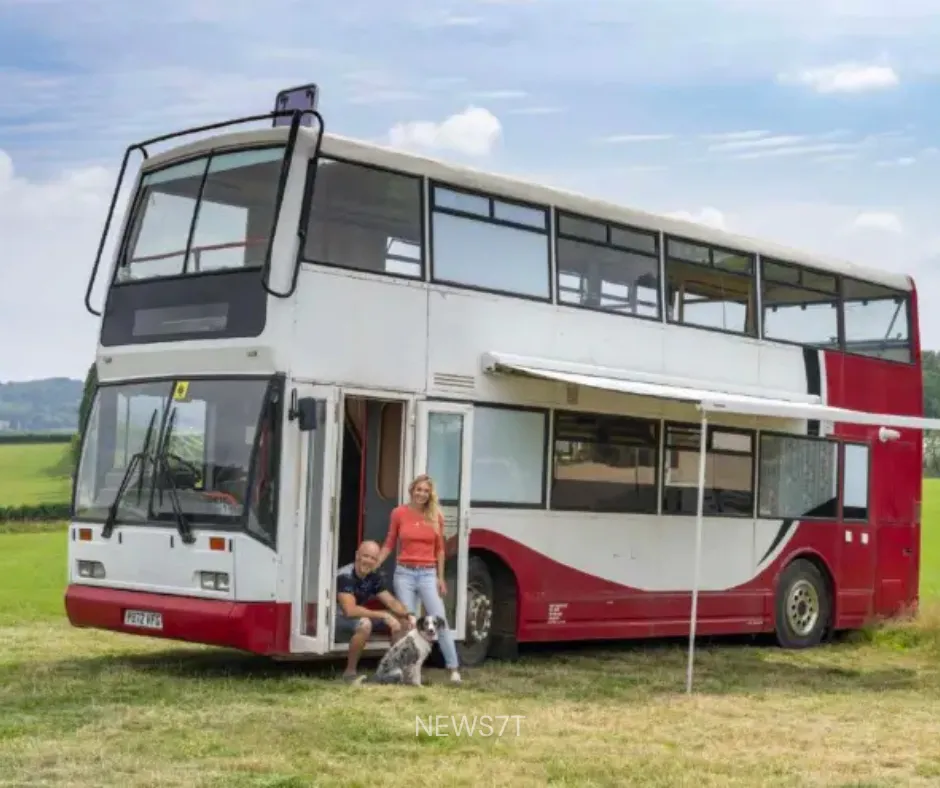
Double Decker Bus Dream Home represents a powerful idea that a home is not defined by concrete walls but by creativity, purpose, and emotional comfort. This unique living space proves that even an old, unused vehicle can be transformed into a beautiful and functional home when imagination meets determination. In a time when housing costs are increasing and environmental awareness is becoming more important, such alternative living solutions offer hope and inspiration to people who wish to live differently, sustainably, and more intentionally.
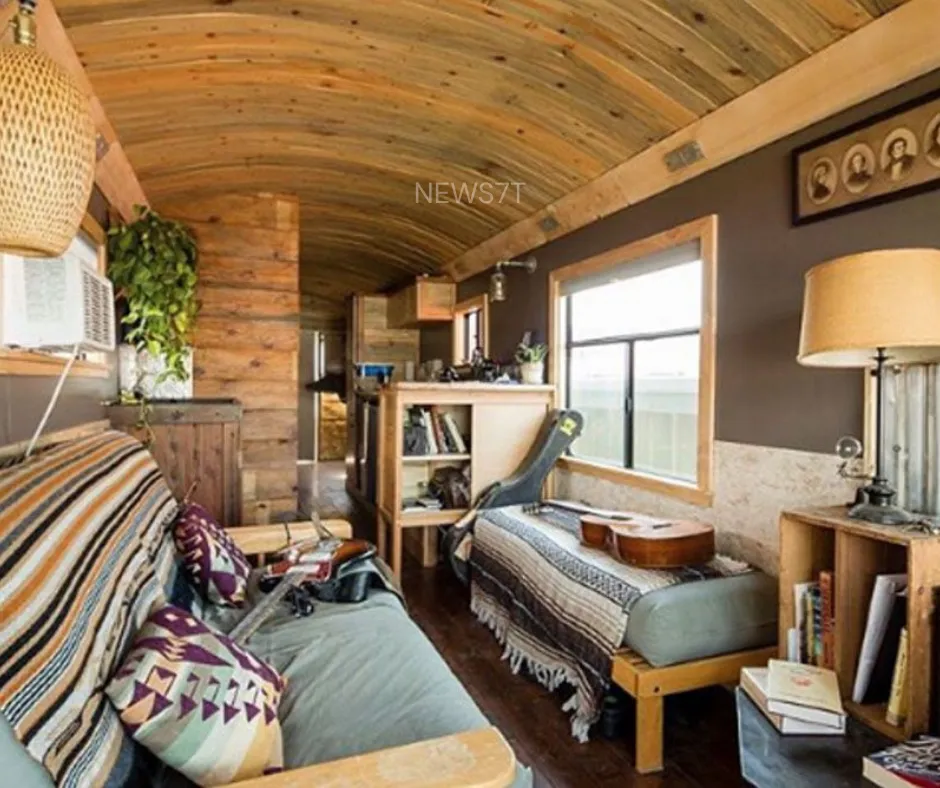
Table of Contents
Rethinking the Meaning of a Home
For generations, people have believed that a proper home must be built using bricks, cement, and permanent foundations, symbolizing stability, wealth, and social acceptance. Traditional homes have long been viewed as lifetime achievements and indicators of success, often measured by size, location, and cost. However, modern lifestyles, economic challenges, and changing personal priorities are encouraging individuals to rethink this deeply rooted belief. In today’s fast-paced world, people are increasingly questioning whether owning large, expensive houses truly leads to happiness and security. Instead, many are realizing that a home is not defined by physical materials alone, but by the sense of comfort, safety, and emotional well-being it provides.
A home today is increasingly seen as a personal space that supports mental peace, freedom, and sustainability rather than social status or material display. With rising stress levels, environmental concerns, and financial pressure, people are seeking living spaces that promote simplicity and balance. This shift in thinking has opened the door to creative housing ideas that challenge traditional construction methods and long-established norms. Alternative living concepts such as tiny homes, mobile houses, and converted vehicles have gained popularity because they offer flexibility, affordability, and a closer connection to nature. These new approaches encourage people to focus on quality of life rather than quantity of possessions, proving that true comfort can exist even in unconventional spaces.
The Inspiration Behind Choosing a Bus
The idea of converting a bus into a home often begins with a strong desire to escape routine life and embrace simplicity and independence. Many people feel restricted by traditional housing systems that demand long-term financial commitments and fixed locations. An old double-decker bus, once a symbol of movement, travel, and daily journeys, naturally represents freedom and change. Unlike conventional houses that remain rooted in one place, a bus carries the spirit of mobility and adventure, offering the possibility of a lifestyle that is less confined and more flexible. This sense of freedom plays a powerful role in inspiring individuals to imagine a different way of living.
Choosing a bus as a home also reflects a deep connection to personal values rather than material expectations. Instead of focusing on luxury, size, or social approval, this choice emphasizes creativity, sustainability, and self-expression. A bus provides a blank canvas where design decisions are driven by personal needs and imagination rather than market trends. For many, this unconventional choice is about reclaiming control over their lifestyle, reducing dependence on expensive housing systems, and creating a home that truly reflects who they are. In this way, the inspiration behind choosing a bus is not merely practical but deeply emotional and philosophical, symbolizing a commitment to a simpler, more intentional way of life.
From Public Transport to Private Space
A bus that once transported hundreds of passengers daily was never designed to function as a home, making its transformation into a private living space both challenging and fascinating. Public transport vehicles are built for efficiency, durability, and maximum occupancy, not comfort or personal expression. The interior of such a bus is typically noisy, crowded, and purely mechanical, with little consideration for warmth or privacy. Turning this environment into a calm and welcoming home required a complete shift in perspective, where every element had to be reimagined with human comfort in mind rather than transportation needs.
This transformation involved far more than physical modifications; it demanded emotional and creative thinking as well. The space needed to evolve from a public setting into a deeply personal one, where the occupant could feel safe, relaxed, and emotionally connected. Harsh metal surfaces were replaced with softer materials, open seating areas were redesigned for intimacy, and cold functionality was transformed into warmth and character. This process required imagination to see potential beyond limitations and creativity to convert an impersonal structure into a place that could truly be called home.
The Initial Demolition and Cleaning Process
The conversion journey began with the complete demolition and cleaning of the bus interior, reducing it to its basic structural framework. All old passenger seats, worn-out flooring, interior panels, and outdated fixtures were carefully removed to create an empty shell that could be redesigned from the ground up. This stage was physically demanding and required long hours of manual labor, as many parts of the bus were heavy, rusted, or firmly fixed in place after years of use. Despite its difficulty, this process was essential to gain full control over the space and prepare it for safe residential use.
Cleaning the bus thoroughly also played a crucial role in the transformation. Years of dirt, grease, rust, and mechanical residue had to be removed to reveal the true condition of the vehicle. This allowed structural weaknesses, corrosion, and hidden damage to be identified and repaired before further construction began. Removing the layers of wear and tear created a blank canvas that made it possible to redesign the interior without limitations. By starting from scratch, the foundation of the new home could be built safely, efficiently, and with confidence in the long-term durability of the structure.
Structural Repairs and Safety Measures
Once the interior of the bus was completely cleared, the focus shifted to structural repairs and the implementation of essential safety measures. Years of exposure to weather, constant use, and lack of maintenance had caused rust to form in several areas, particularly around joints, flooring, and metal panels. These rusted sections were carefully treated, repaired, or replaced to prevent further deterioration. In addition, all leaks in the roof and walls were sealed to protect the interior from moisture, which could otherwise damage insulation and interior finishes over time.
Safety was considered a top priority throughout this stage, as the structure needed to be strong enough to support daily living activities. Weak areas of the bus frame were reinforced to improve stability and load-bearing capacity, especially where furniture, stairs, or heavy installations would later be added. Ensuring proper balance and structural integrity was essential not only for comfort but also for long-term durability. These repairs provided a solid and reliable foundation, giving confidence that the converted bus would remain safe, stable, and livable for years to come.
Insulation and Climate Control
Metal vehicles, such as buses, are inherently unsuitable for year-round living because they are prone to extreme temperature fluctuations. In winter, the metal walls and ceiling can become unbearably cold, while in summer, they can trap heat, creating a stifling environment. To make the bus livable, proper insulation was a critical step in the conversion process. High-quality insulating materials were installed throughout the walls, ceiling, and floor to create a thermal barrier, preventing heat loss during winter and minimizing heat gain during summer. This not only ensured a comfortable indoor climate but also significantly reduced the need for excessive heating or cooling, making the home more energy-efficient and sustainable.
In addition to insulation, climate control measures such as ventilation systems, strategically placed windows, and adjustable vents were incorporated to maintain air circulation and improve indoor air quality. These features allowed the space to feel fresh, breathable, and comfortable, even during prolonged periods of occupancy. The combination of insulation and climate control transformed the bus from a cold, impersonal metal shell into a warm, inviting, and functional home that could be enjoyed throughout the year. This stage highlighted how thoughtful design and careful planning can overcome the natural limitations of a nontraditional living space, creating an environment that supports both physical comfort and mental well-being.
Electrical and Plumbing Installation
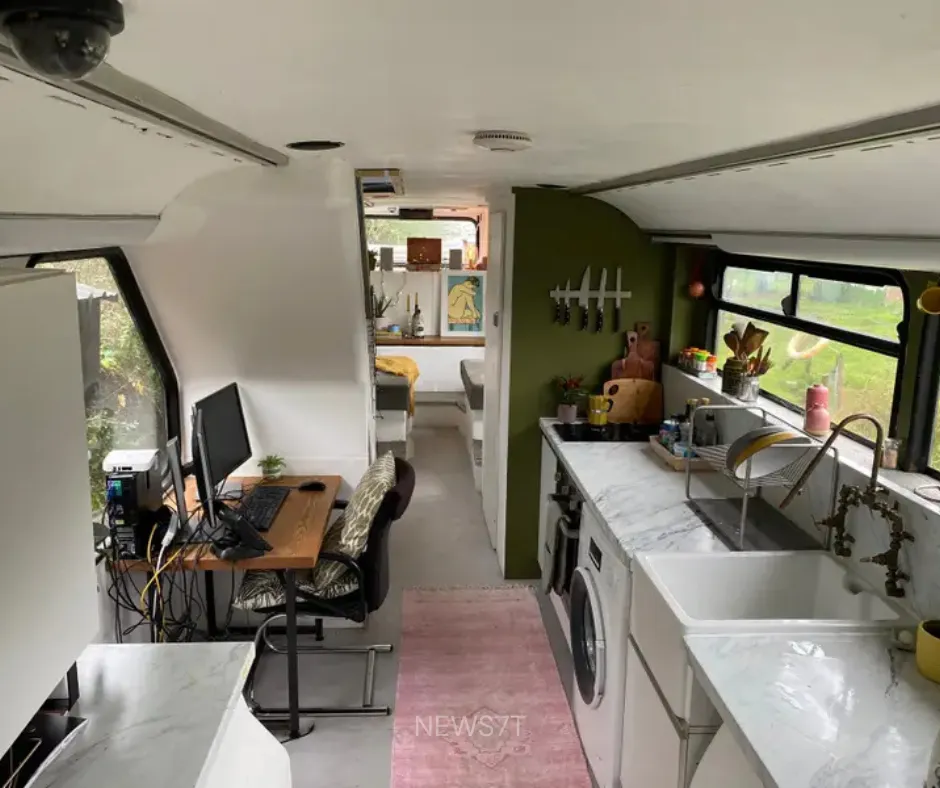
Installing electrical and plumbing systems inside a bus presented one of the most challenging stages of the conversion, requiring meticulous planning, precision, and technical expertise. Unlike traditional homes, a bus offers extremely limited space, meaning that every wire, pipe, and fixture had to be carefully positioned to avoid clutter, maintain safety, and ensure functionality. Electrical circuits were designed to support essential modern conveniences, including lighting, heating systems, kitchen appliances, and charging points for devices, all while preventing overloads and ensuring energy efficiency. Special attention was given to wiring concealment and insulation to avoid hazards associated with loose or exposed cables, which could pose a risk in a compact living environment.
Similarly, the plumbing system required creative solutions to fit seamlessly within the bus’s constrained dimensions. Pipes, tanks, and drainage systems were strategically installed to provide running water for the kitchen and bathroom while maintaining proper flow and preventing leaks. Compact yet efficient water heaters, sinks, and waste systems were integrated to make daily routines convenient, ensuring the bus functioned like a standard home despite its unconventional structure.
Installing these systems transformed the bus from a bare, metal shell into a fully operational and self-sufficient living space, allowing the occupants to enjoy all the comforts of modern life while embracing a mobile, minimalist, and sustainable lifestyle. This stage underscored the importance of careful planning and technical knowledge in turning an unconventional structure into a truly functional and safe home.
Interior Design and Space Planning
Designing the interior of the bus required a careful balance between functionality, aesthetics, and efficient space utilization, as every inch of the limited area needed to serve multiple purposes. Unlike traditional homes, where space is abundant and layouts can be expansive, a bus demands creative solutions to avoid feelings of confinement or overcrowding. The interior design process focused heavily on maximizing open space while creating designated zones for living, cooking, sleeping, and storage.
Open layouts were prioritized wherever possible, allowing movement to flow naturally from one area to another, which helped make the bus feel larger and more comfortable than its actual dimensions.
Smart storage solutions played a critical role in maintaining order and reducing clutter. Cabinets were custom-built to fit into awkward corners, under stairs, or along walls, while multipurpose furniture served double functions—such as benches with hidden compartments or foldable tables that could be stowed away when not in use. Attention was also given to aesthetic appeal; color schemes, materials, and textures were chosen to create warmth, lightness, and a sense of openness.
Natural light from windows was maximized, while lighting fixtures were strategically placed to illuminate spaces without overwhelming them. Every element of the design was carefully considered to enhance the functionality and livability of the bus while preserving a welcoming, visually pleasing atmosphere. The result was a harmonious blend of practicality and beauty, demonstrating that even highly unconventional spaces can achieve both comfort and elegance when planned thoughtfully.
The Use of Natural Materials
The use of natural materials played a central role in transforming the bus from a cold, industrial vehicle into a warm, inviting home. Among these materials, wood was particularly prominent, used for flooring, wall panels, furniture, and even small decorative elements. Wooden floors added both durability and aesthetic appeal, creating a foundation that was sturdy yet visually comforting.
Wall panels made from natural timber introduced texture and warmth, breaking the monotony of metal surfaces and making the interior feel organic and alive. Furniture crafted from reclaimed or sustainably sourced wood further reinforced the natural ambiance, combining practicality with elegance while emphasizing a connection to the environment.
Beyond aesthetics, natural materials contributed to a calming and psychologically comforting atmosphere. The tactile qualities of wood, along with its subtle patterns and grains, provided a sense of grounding and stability, helping to offset the unusual spatial constraints of living in a bus. Natural materials also complemented other design choices, such as the inclusion of plants, neutral color schemes, and sunlight from strategically placed windows, creating a cohesive and serene environment.
By relying heavily on wood and other natural finishes, the space no longer felt like a converted vehicle but instead resembled a thoughtfully designed, intimate, and functional home. This approach highlighted how material choices can profoundly influence not just the look of a space, but also the emotional and sensory experience of living within it.
Creating a Comfortable Living Area
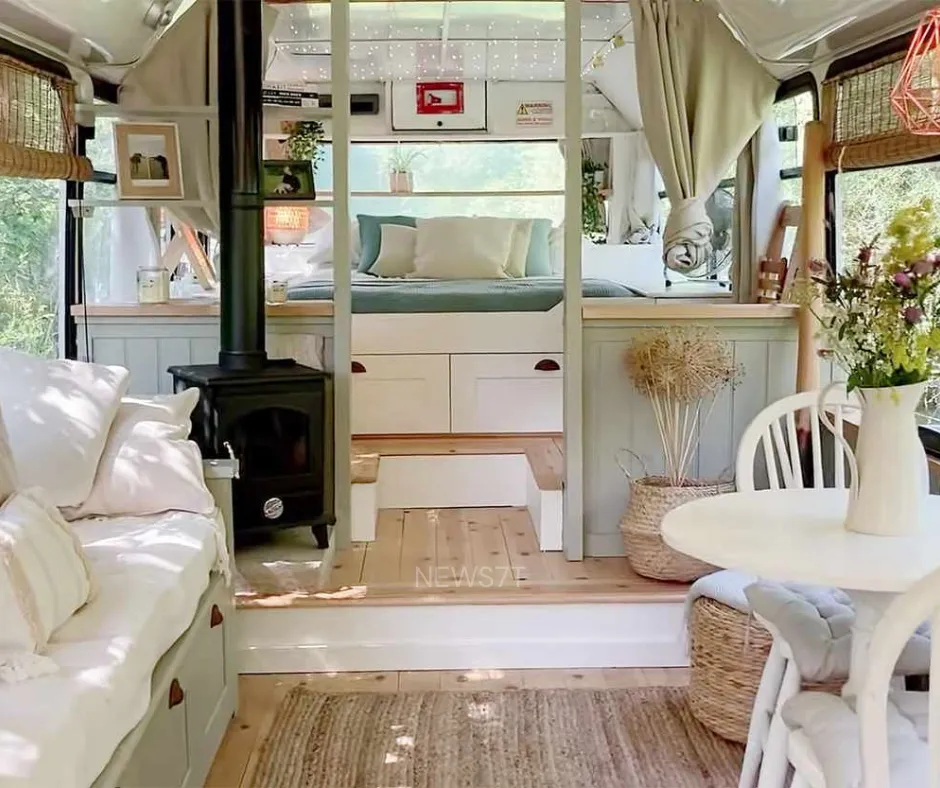
The living area became the heart of the bus home, serving as the central space for relaxation, social interaction, and daily activities. Unlike traditional houses with separate rooms and abundant square footage, the bus required careful planning to create a comfortable zone within a limited footprint. Every element of the living area was chosen and arranged with intention to maximize comfort and usability. Soft, cushioned seating replaced the original rigid bus benches, offering a cozy spot to read, work, or socialize. Multi-functional furniture, such as benches with storage underneath and foldable tables, further enhanced the practicality of the space while keeping clutter to a minimum.
Lighting played a crucial role in making the living area inviting and warm. A combination of natural light streaming in through large windows and strategically placed artificial lights created a balanced ambiance, ensuring that the space felt bright during the day and cozy in the evening. Textures and colors were carefully selected to promote a sense of calm and relaxation, using soft fabrics, wooden surfaces, and neutral tones that complemented the natural materials used elsewhere in the bus.
Additionally, the layout was designed to encourage fluid movement, making the area feel open and spacious despite its limited size. Plants and small decorative touches added life and personality, reinforcing the feeling of a home rather than a repurposed vehicle. Through thoughtful design, attention to detail, and a focus on both function and aesthetics, the living area became a truly comfortable and welcoming core of the bus home, demonstrating that even compact spaces can provide warmth, connection, and a sense of well-being.
A Symbol of Freedom and Modern Living
This transformed bus stands as a powerful symbol of freedom, creativity, and modern living, representing more than just a physical dwelling—it embodies a mindset and lifestyle that values independence, self-expression, and intentional choices. Unlike traditional homes, which often tie people to long-term financial obligations, rigid schedules, and conventional societal expectations, this bus offers the freedom to live differently, to prioritize personal happiness, and to shape one’s environment according to individual values.
Every aspect of the conversion, from structural modifications to interior design, reflects the courage to challenge norms and embrace unconventional ideas, proving that innovation and determination can transform even the most ordinary objects into extraordinary living spaces.
Moreover, this bus highlights the growing movement toward minimalism, sustainable living, and creative problem-solving in the modern world. By reimagining a vehicle originally intended for mass transit as a fully functional, cozy, and aesthetically pleasing home, it demonstrates that modern living does not require excess, large spaces, or traditional resources. The project underscores how dedication, patience, and imagination can overcome physical, financial, and technical challenges, resulting in a space that is both practical and deeply meaningful.
It also serves as an inspiration to others, showing that unconventional ideas can lead to fulfilling lifestyles, stronger emotional connections to one’s home, and a greater sense of autonomy and purpose. In essence, this bus is not merely a converted vehicle—it is a testament to human creativity, resilience, and the modern pursuit of freedom, proving that a home’s true value lies in the experiences it enables and the life it supports rather than its size, cost, or conformity to tradition.